

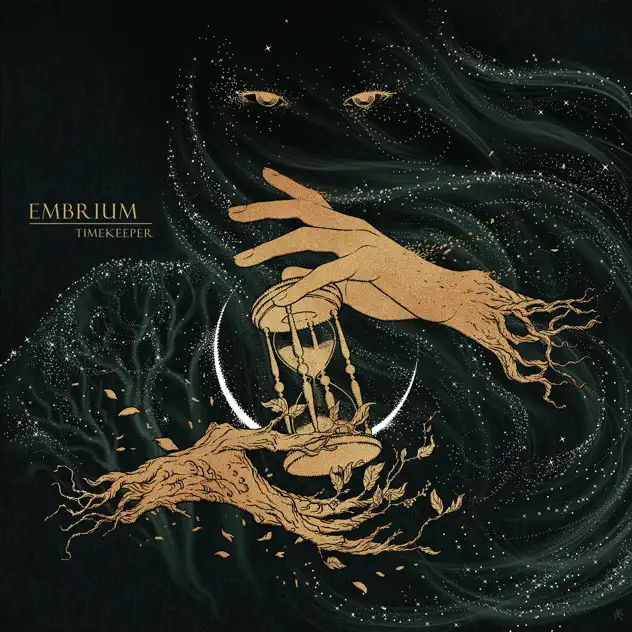
Embrium
Timekeeper
Embrium
Timekeeper
- release date /2025-03-15
- country /US
- gerne /Black Metal, Blackgaze, Folk, Gothic, Post-Metal
The debut full-length from San Francisco blackgaze band Embrium.
Now operating as a five-piece—Mosahefu (gt/vo), Jade Forsythe (vo), Joey Menicucci (gt/vo/ba), Ayani Hayashi (ba), and Matt Baird (dr)—the project began in 2020 as a pandemic-era collaboration between Mosahefu, Forsythe, and Menicucci. Following their self-titled EP in 2021, this album expands its scope with a narrative focus on themes of time, loss, magic, and self-discovery.
Embrium fuse black metal intensity with shoegaze atmospherics, layering folk-tinged melodies that add emotional depth beyond sheer volume. The contrast between Mosahefu’s clear clean vocals and Forsythe’s piercing screams is particularly striking, and may invite comparisons to Sylvaine.
A highlight is #5 “Eclipse” inspired by Kentaro Miura’s Berserk. Referencing the Band of the Falcon and the God Hand, the track traces the arc of the Eclipse with dramatic weight. Fluid lead guitar lines surface between crushing passages, suggesting a melodic sensibility reminiscent of Amorphis and Swallow the Sun, reinforcing the album’s dark atmosphere.
#6 “Awakened” inspired by Norihiro Yagi’s Claymore, opens with shimmering dream-pop textures before erupting into full-throated screams in the chorus. The dynamic shift provides one of the record’s most vivid contrasts.
The closing track is a cover of The Mars Volta’s “Televators” featuring guest vocals by Kyle Schaefer (Fallujah, Archaeologist). While preserving the original’s introspective mood, Embrium reshape it through serrated guitars and visceral intensity, fully translating it into a blackgaze framework.
Drawing from established influences while displaying notable compositional control, the record suggests a band poised for further growth within the blackgaze and post-black metal sphere. Listeners drawn to Alcest, Sylvaine, or Shedfromthebody may find this particularly compelling.


Blurred City Lights
Dystopia
Blurred City Lights
Dystopia
- release date /2025-02-07
- country /Japan
- gerne /Alternative Rock, Ambient, Dream Pop, Post-Rock, Shoegaze
The second album from Japanese shoegaze band Blurred City Lights.
Structured as a two-part work titled “Utopia” and “Dystopia,” this section focuses primarily on “Dystopia.”
In contrast to the radiance of “Utopia,” “Dystopia” functions as the album’s shadow. Its melodies are less overtly catchy, shaded instead with restraint and introspection. The band further amplifies delicate ambient textures and post-rock techniques reminiscent of Sigur Rós, unfolding a deeply immersive soundscape. The composer credits frequently list guitarist Megumi, suggesting that his aesthetic sensibilities may play a significant role in shaping this darker half.
The opening #1 “dreamland” introduces an ethereal atmosphere pierced by pulsing tones that evoke a vast, unbounded cosmos. On #2 “Whisper,” the lyrics dwell on an inability to escape “the beginning of eternity,” expressing quiet resignation. References to external memory and protocols hint that the pastoral world of “Utopia” has subtly advanced into a more technologically inflected future.
#3 “shinjuku” begins with the sound of a cassette tape rewinding, intermittently disrupted by uneasy pulses. The instrumental suggests an ominous premonition. #4 “Bourei Toshi” unfolds as a melancholic piece where fragile arpeggios fall like ash, tracing sorrow for a ruined civilization. A brief shift to a slightly faster tempo near the end feels like a final surge of strength—an attempt to reach for someone already lost.
The centerpiece is the nine-minute epic #5 “Kimi No Koe.” Structured around a gradual dynamic ascent from stillness to overwhelming force—recalling the dramatic arcs of Mono or Explosions In The Sky—the track culminates in a massive eruption of sound that suggests something cosmic in scale, akin to a supernova or even a Big Bang. The closing piano instrumental, #6 “the end of Dystopia?”, brings the record to a quiet pause. Its tonal resemblance to “Utopia”’s #5 “utopiaflorist” subtly implies a hidden symmetry between the two worlds.
Taken together, “Utopia” and “Dystopia” resemble opposing forces that complete one another, much like the yin–yang symbol. Yet the work appears to invite deeper interpretation.
The key lies in #3, “shinjuku,” from Dystopia. At first, the album seems to unfold within a purely imagined world. Yet the sudden appearance of the real place name “Shinjuku” introduces the possibility that this narrative is contiguous with our own reality. Like the Statue of Liberty in Planet of the Apes, it functions as a masterful narrative twist.
The word “Shinjuku” also brought to mind another association: the E ending of the game Drakengard, commonly known as the “Shinjuku ending.” Even among its so-called “multi–bad endings,” it stands out as particularly shocking—an experience that left countless players feeling as though their brains had been seared. It is well known among fans that this ending serves as the narrative origin point for what would later unfold in NieR Replicant and NieR: Automata. Moreover, beginning with NieR Replicant, the NieR series reveals hidden truths on subsequent playthroughs, overturning the player’s assumptions and inverting their understanding of the story. This structural reversal resonates uncannily with the dual, interdependent construction of “Utopia” and “Dystopia.”
Within the NieR series itself, there are scattered suggestions of a reconnection to the world of Drakengard, allowing the two franchises to be interpreted as forming a mutually interfering spiral structure. The question mark appended to the album’s closing track, “the end of Dystopia?”, likewise implies that dystopia does not arrive at any definitive conclusion.
In this light, might “Dystopia” return to “Utopia,” and “Utopia” to “Dystopia,” revolving in a spiral rather than progressing along a straight line? Like the sun rising, setting, and rising again. Or like the oscillating universe hypothesis, in which the cosmos expands from a Big Bang, contracts toward a Big Crunch, and is born anew. Perhaps listeners themselves are caught within such a spiral—one without true beginning or end (here, the lyrics from Whisper, “We cannot escape from the eternal beginning,” gain new resonance).
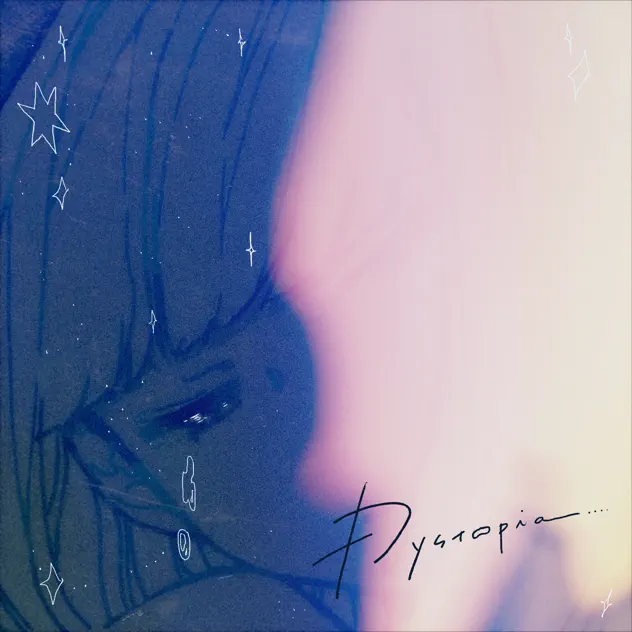
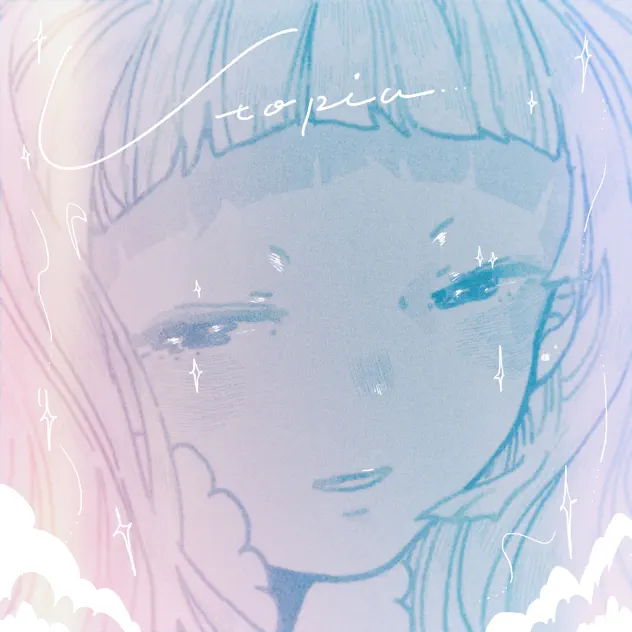
Even the CD design reinforces this interpretation: the titles “Utopia” and “Dystopia” are arranged in point symmetry on the disc face, maintaining the same layout when rotated 180 degrees. Which comes first, and which follows? If the two works were divided in order to unsettle that very assumption, there may be only one recommended way to listen: connect them in a single playlist, set it to loop, and surrender to the eternal spiral.
Perhaps this is mere speculation. Yet the album possesses enough structural and emotional coherence to sustain such a reading. In that sense, Blurred City Lights feels like a band that grants listeners wings to soar into boundless imagination.
For those discovering Blurred City Lights through this release, their true force may be experienced most fully in a live setting. The sheer density of sound they generate as a trio can be startling. The band has also shared breakdowns of their guitar textures on YouTube for listeners interested in the mechanics behind the distortion-laden sound. Blurred City Lights – Shoegaze Guitar Effects & Riff Breakdown
The CD and Bandcamp editions include bonus tracks: “Yudachi” on “Utopia” and “sumire” on “Dystopia.” Both further demonstrate the band’s distinctive sensibility and are well worth seeking out.
Previous review: Blurred City Lights – Utopia
Blurred City Lights
Utopia
Blurred City Lights
Utopia
- release date /2025-02-07
- country /Japan
- gerne /Alternative Rock, Ambient, Dream Pop, Post-Rock, Shoegaze
The second album from Japanese shoegaze band Blurred City Lights.
Based in Nagoya, Blurred City Lights formed in 2022. Originally a five-piece, the lineup shifted the same year when two members departed in August; since then, the band has operated as a trio: Nanase Kamiya (Vo/Ba/Key), Megumi (Gt), and Ryuma Ohashi (Dr). Their previous work was noted for its delicately crafted melodies and narrative-driven compositions. This latest release, arriving roughly a year later, introduces a new conceptual approach: a paired structure titled “Utopia” and “Dystopia.”
Although the two halves are distributed separately on streaming platforms, they function most coherently as a single body of work. Together, they suggest a large-scale concept album shaped by dualities—light and shadow, hope and resignation. Due to the format of this site, the two parts will be reviewed separately; this first installment focuses on “Utopia,” the album’s luminous counterpart.
“Utopia” embodies the album’s light. The instrumental opener #1 “Uzu” flows directly into #2 “swirl of lights,” where shimmering sheets of distortion surge forward, immersing the listener in a literal vortex of light. The effect feels almost hymn-like in its expansiveness. In recent years, indie or alternative bands with female vocals have sometimes been loosely categorized as shoegaze by more casual listeners; here, however, the dense, fully realized wall of sound firmly situates Blurred City Lights within the genre’s core tradition.
On #3 “Shukusai,” the album’s brightness becomes even more pronounced. A pastoral waltz rhythm carries a sweeping, sunlit grandeur, as if sunlight, wind, and the rustling of trees had been translated directly into sound. The arrangement subtly quotes Bach’s “Jesu, Joy of Man’s Desiring” toward the finale—an elegant gesture that reinforces the track’s devotional atmosphere.
#4 “Hoshinagi Ni Negau” foregrounds Kamiya’s refined pop sensibility. The clear, cool-toned vocals and wistful melodic contours may resonate strongly with listeners drawn to acts such as Hitsujibungaku or Homecomings. A brief piano interlude, #5 “utopiaflorist,” creates negative space within the narrative before #6 “Planet” releases its skyward prayer, guiding the story toward a conclusion steeped in hope.
Yet this world shifts once “Dystopia” is heard. Its light takes on a different meaning in the presence of what follows.
Next review: Blurred City Lights – Dystopia
Kuyuru
Lovescape
Kuyuru
Lovescape
- release date /2025-02-19
- country /Japan
- gerne /Alternative Rock, Blackgaze, Doomgaze, Grunge, Post-Rock, Shoegaze, Slowcore
The first full-length album from Tokyo-based shoegaze band Kuyuru.
Formed in 2022, Kuyuru quickly gained attention for their overwhelming live performances. The current lineup consists of Orito Ayana (Vo/Gt), H. Tobita (Gt), Ueda Ryuta (Gt), Kawase Rui (Ba), and Yamaguchi Wataru (Dr). At the core of their sound is a triple-guitar assault that produces a wall of distortion, creating a violent yet beautiful contrast that is among the most intense in Japan. The drums cut through this sonic wall with incredible power, forming the backbone of the band’s formidable sound.
Given the extremity of the instrumentation, newcomers might initially feel this is far from shoegaze. Yet the ethereal, mirage-like vocals firmly anchor Kuyuru in the genre. This interplay of “violence” and “beauty” is central to their aesthetic.
The album features a diverse set of tracks that transcend genre boundaries. #1 “mope” alternates between quiet and intense passages, plunging the listener into darkness, while #2 “Aoisora” spirals with abrasive noise before culminating in a Blackgaze-style wall of sound. #7 “momo” blends slowcore melancholy with doomgaze weight, and #8 “BESIDE” unfolds into expansive post-rock-inspired soundscapes. Each of the eight tracks has a distinct character.
Recently, Japan has seen a rise in heavy shoegaze bands influenced by acts like Nothing and Whirr. Kuyuru, however, pushes further into new territory. They have performed at events that feature extreme hardcore and metal, captivating audiences with their aggressive, immersive sound—evidence of their embodiment of the alternative spirit in the Japanese shoegaze scene.
While the album production is clear and comfortable, it retains a live-like energy. Listeners who have experienced their concerts multiple times are likely to find it highly satisfying. In a live setting, the band attacks with an overwhelming sonic force that envelops the entire body—those unfamiliar should experience it firsthand. It becomes evident that Kuyuru truly shines in live performance. Earplugs are highly recommended.
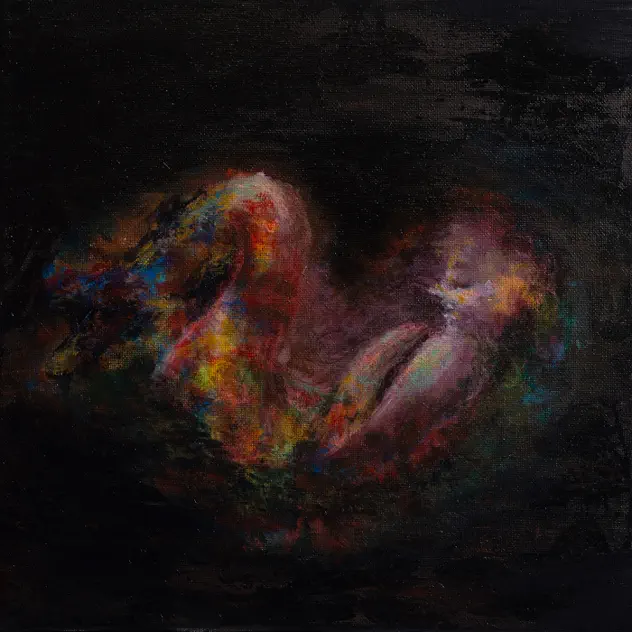
The cover art also warrants attention. The image of a figure curling in darkness evokes a fetal position. One might imagine that, within the womb, the predominant sounds are the mother’s heartbeat and blood flow, with occasional calls or song reaching through the noise like beams of light. This can be interpreted as a primordial shoegaze archetype. In this context, the recent shoegaze boom in Japan could be seen as a collective desire to escape harsh realities into a “Lovescape”—a womb-like place of love and comfort. Kuyuru’s music serves as a perfect soundtrack for this longing.
KRISHNV
Craving and dirges
KRISHNV
Craving and dirges
- release date /2025-12-12
- country /Japan
- gerne /Alternative Rock, Dark Ambient, Doomgaze, Experimental, Folk, Noise, Post-Metal, Post-Rock, Progressive
The 2025 release from Tokyo-based experimental rock band KRISHNV, listed in their discography as their third album.
Formed in 2019 by Takumi Izawa (guitar/vocals) and Shunsuke Shibuya (bass), KRISHNV has developed a sound that might be described as alternative dark tribal music. Tribal rhythms reminiscent of ancient ceremonies provide a steady pulse, while a slow-moving wall of distortion gradually permeates the tracks, over which hypnotic, mantra-like vocals unfold. The result often suggests a fusion of TOOL’s ritualistic rhythms and Dead Can Dance’s mystical atmospheres, though the Japanese lyrics resonate almost like foreign incantations, highlighting the band’s singular sense of mystique.
The immersive 19-minute-plus #10 “Obsidian” exemplifies this approach, creating an experience that feels almost like a Domain Expansion, a fully enveloping space that draws the listener entirely into the music.
Live, the band often brings in support members to generate a wall of sound with twin drums and triple—or sometimes quadruple—guitars. Against a backdrop of VJ visuals drifting in darkness, their performances become less about playing music and more about enacting a ceremony. Initially, listeners might feel a primal unease, as if glimpsing another realm, but surrendering to the sound often leads to a physical, ecstatic response.
KRISHNV seems to summon both the sacred and the profane—the truth of which is best discovered firsthand.
Slow snow slide
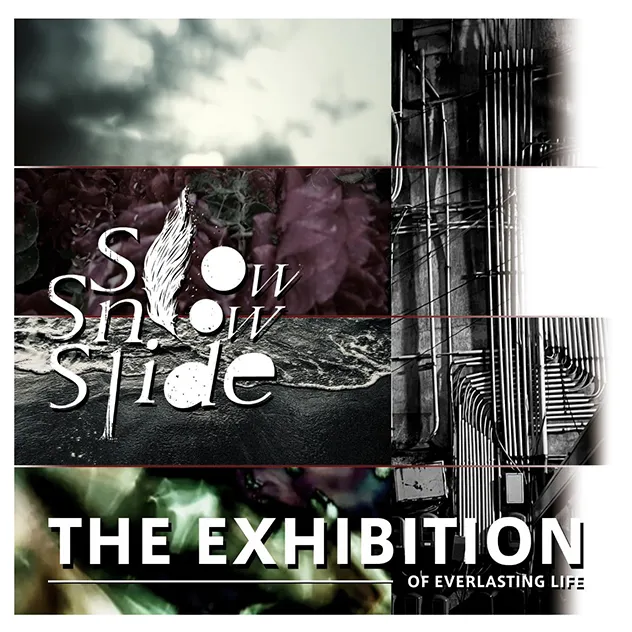
THE EXHIBITION
Slow snow slide
THE EXHIBITION
- release date /2025-05-03
- country /Japan
- gerne /Alternative Rock, Gothic Rock, New Wave, Post-Punk, Post-Rock, Shoegaze
The second album from Sakata, Yamagata–based shoegaze band Slow Snow Slide.
Originally formed in 2016, the band released their debut album paradise lost in 2019. Following lineup changes, they reemerged in 2022 with a five-member configuration for this new release. The recording lineup featured GOE (vocals/guitar), TAKEDA NATSUKO (guitar/vocals), YAMA (guitar), MASAKUNI (bass), and YOKOCHIN (drums), with MASAKUNI departing after the release.
Their debut combined post-rock and shoegaze with classical elements like piano and violin, establishing a distinctive sound beyond conventional boundaries. The band name, “Slow Snow Slide,” reflects their signature expansive soundscapes. THE EXHIBITION takes inspiration from Modest Mussorgsky’s Pictures at an Exhibition, leveraging a triple-guitar and dual-vocal setup to create even more layered textures. Across seven tracks, including the instrumental “Promenade,” each piece depicts a unique scene, unfolding like a tour through an art gallery.
Notable tracks include:
#2 “Drawing on the blank page”
Diamond-dust-like arpeggios intertwine with blizzard-like guitar, flowing in a gentle waltz. Twin vocal harmonies bring warmth and lyricism, evoking sunlight across a frozen landscape.
#3 “Luzifer”
A danceable track with goth- and new wave-infused darkness, featuring cold-toned guitars and GOE’s alluring vocals, accented by pounding drums and soaring guitar.
#6 “Nihilistic”
Interweaving twin guitars navigate dynamic shifts between stillness and intensity, culminating in a grand, emotionally charged climax. Catchy guitar motifs throughout highlight the band’s adventurous spirit.
#7 “Rasen Kaindan”
A dark anthem driven by distorted bass and black waves of sound, ending with a wall of noise and impassioned screams that pull listeners into an abyss.
While each track has its own character, the album is unified around “Promenade,” creating a shared sonic universe—a contemporary reinterpretation of Pictures at an Exhibition.
The album is currently available on CD only (not yet on streaming services) and can be purchased through the official online shop or at live shows. Fans are encouraged to obtain a physical copy to fully experience the immersive, narrative-driven journey. Slow Snow Slide is currently on a release tour across Tohoku and Kanto, offering fans a rare opportunity to witness their performances firsthand. Tour details are available via the band’s official website and social media.
Check Slow Snow Slide’s official website and social media.
Cuspid
Whiplash
Cuspid
Whiplash
- release date /2025-10-15
- country /US
- gerne /Alternative Rock, Dream Pop, Grunge, Nu Metal, Shoegaze, Slowcore
The debut EP from Los Angeles- and Beijing-based shoegaze artist Cuspid.
Currently known only as an 18-year-old admirer of Deftones and Lana Del Rey, this mysterious newcomer delivers astonishing quality on a first outing. Heavy guitar meshes with ethereal melodies reminiscent of Wisp, yet Cuspid’s vocals are darker and more immersive, and the tracks lean toward downtempo heaviness, evoking a sense of melancholy as if sinking to the ocean floor—closer in mood to Graywave or Slow Crush. For listeners wishing Wisp were slightly darker, this EP could be ideal.
#1 “Debris” opens with roaring guitars slicing through the space while misty vocals resonate hauntingly, creating a striking contrast. #2 “Floor 12” unfolds with uneasy arpeggios and a slow progression, gradually building to a release of sorrow by the end. #3 “Flyaway” connects seamlessly with a delicate intro, maintaining a fluid and compelling flow. The closing #4 “Whiplash” takes a slow-tempo approach, carefully weaving melodies and leaving a lingering impression. All four tracks stand at a remarkable level of quality.
Already a strong contender for AOTY, Cuspid is an emerging shoegaze artist to watch, following in the footsteps of Wisp. Current Spotify monthly listeners number just 680, but the trajectory promises much more in the near future.
Keep
Almost Static
Keep
Almost Static
- release date /2025-03-10
- country /US
- gerne /Alternative Rock, Dream Pop, Grunge, Post-Punk, Shoegaze,
The third album from Richmond, Virginia–based shoegaze band Keep.
Formed in 2013 initially as a duo of Nick and Wes, the current lineup consists of Wes Smithers (guitar/sampling), Will Fennessey (bass), Levi Douthit (guitar/synth), and Nick Yetka (drums/vocals). While citing influences such as The Cure, The Smashing Pumpkins, and Slowdive, Keep’s sound extends well beyond these touchstones.
Their debut leaned toward dreamy post-punk reminiscent of The Cure and DIIV, but from the second album onward, their palette has grown more expansive. Anchored by grunge-inspired heavy shoegaze, tracks like #8 “Sodawater” shimmer with dream-pop guitars, while #11 “Hurt a Fly” delivers an emo-tinged, high-energy rush.
The band never feels scattered; the core of Keep’s signature melancholic beauty persists throughout, with emotive vocals intertwining with luminous lead guitar to create richly textured soundscapes. The melodic interplay and powerful guitar riffs benefit from the production and engineering of Zac Montez (Whirr, Cloakroom).
Compared with contemporary heavy shoegaze and grunge-gaze acts, this album remains highly melodic and accessible, making it an excellent entry point for new listeners. Keep has been relentless on the road, completing a spring tour with hometown peers Turnover, a summer tour including a run with Leaving Time in August, and an EU/UK tour starting in late October with Slow Crush. Their continued momentum suggests growing international attention, with hopes high for a future visit to Japan.

Church of the Sea
Eva
Church of the Sea
Eva
- release date /2025-04-11
- country /Greece
- gerne /Alternative Rock, Doom Metal, Doomgaze, Folk, Gothic, Industrial
The second album from Athens-based doomgaze band Church of the Sea.
Formed in 2017, the current lineup consists of Irene (vocals), Vangelis (guitar), and Alex (synth/sampler). Their signature lies in multi-layered soundscapes combining exotic, folk-influenced vocals, earth-shaking heavy guitar, and ethereal shoegaze textures. The album title, Eva, references the biblical Eve, and features lyrics in Greek for the first time, lending a shamanic, mystical quality that transforms myth into sound.
A standout track is #3 “Eva,” where tribal percussion underpins the mystical vocals as they gracefully unfold. Doom-inflected guitar emerges in the latter half, gradually increasing tension and evoking a ritualistic crescendo. The result is a majestic piece that feels like Dead Can Dance interpreted through a doomgaze lens. From bedroom introspection to Edenic grandeur, the album exudes a distinctly Greek aura. Fans of Dead Can Dance, Chelsea Wolfe, and Shedfromthebody will find much to appreciate.
Photographic Memory
I Look at Her and Light Goes All Through Me
Photographic Memory
I Look at Her and Light Goes All Through Me
- release date /2025-05-30
- country /US
- gerne /Alternative Rock, Bedroom Pop, Electro Pop, Emo Rap, Grunge, Indie Electronica, Nu Metal, Shoegaze, Synth Pop
The second album from Los Angeles–based producer/musician Max Epstein’s project Photographic Memory.
Released via US indie label deadAir Records, Photographic Memory has been active under this name since 2013, while Epstein has contributed to recordings and live support for Quannnic, Militarie Gun, and Cold War Kids. He has also been involved in Wisp’s Pandra era, supporting the If Not Winter tour and collaborating onstage, showcasing his versatility across projects.
Early work centered on dreamy bedroom pop and dream pop, but this album expands into emo-rap, indie electronica, and Nu-Gaze, demonstrating a wide-ranging sonic palette. Notable tracks include #8 “Clearly,” a refreshing electro-pop number reminiscent of Porter Robinson; #10 “Born 7:7 (feat. Darcy Baylis),” where ethereal electronica merges seamlessly with heavy shoegaze; #11 “Heartstyle (feat. Wisp),” a synth-laden, danceable track revealing a new side of Wisp; #12 “Love In My Heart,” a heavy instrumental drawing on nu-metal and grunge, with aggressive guitar tones echoing Korn and Alice in Chains; and #17 “Spill (feat. Kraus),” a melancholic heavy shoegaze highlight featuring thick guitar walls and soft vocals, showcasing Kraus’ signature touch.
Polished through his production experience, this album reflects Epstein’s cross-genre fluency. As a next-generation shoegaze artist, his work alongside Wisp marks him as one to watch.