
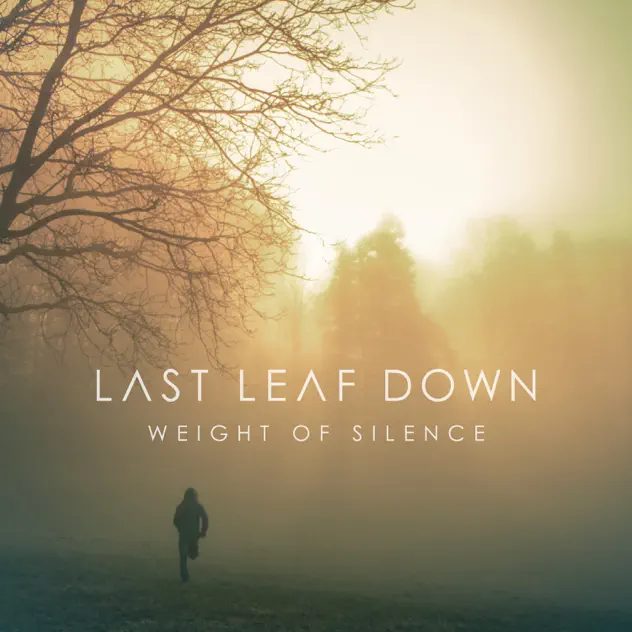
Last Leaf Down
Weight Of Silence
Last Leaf Down
Weight Of Silence
- release date /2025-04-11
- country /Switzerland
- gerne /Dream Pop, Post-Metal, Post-Punk, Post-Rock, Shoegaze, Slowcore
The third album from Swiss shoegaze band Last Leaf Down.
Originally formed in 2003 as a doom metal outfit inspired by Katatonia, Last Leaf Down took a unique turn toward shoegaze following the arrival of Benjamin Schenk (Vo/Gt) in late 2007. Through their first two albums, “Fake Lights” (2014) and “Bright Wide Colder” (2017), the band established a delicate, melancholic sound evocative of freezing air. They have since made a significant mark on the scene, performing at Wave-Gotik-Treffen, the world’s largest gothic festival, and supporting acts like Alcest and Les Discrets. While their initial recognition in Japan leaned toward the metal community due to their label's background, they gained broader attention from a new demographic of music fans after being introduced by video game creator Hideo Kojima on X.
Arriving after an eight-year hiatus, this latest release features a shift in its sonic landscape that softens the icy chill of their previous work, bringing a gentle texture evocative of a spring thaw. However, tracks like #8 “A Quiet Lost War” and #9 “The Ending” ensure that the band’s signature mournful beauty remains intact. The diamond-dust arpeggios, emotive tremolo, and soulful, steady vocals are fully realized, offering a result that long-time fans will find reassuring.
A notable highlight is #4 “Illusion.” As one of their most uptempo tracks to date—appears to symbolize the renewed vitality of a band stepping into a fresh phase after a long silence. Yet, the lyrics remain deeply somber, proving that their dark identity remains unchanged despite the shift in sound.


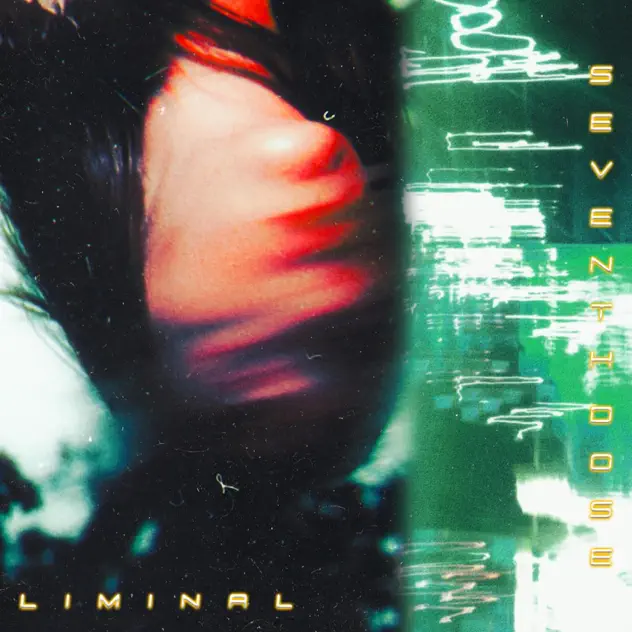
Seventh Dose
Liminal
Seventh Dose
Liminal
- release date /2025-11-05
- country /US
- gerne /Alternative Rock, Dream Pop, Grunge, Nu Gaze, Shoegaze
The second EP from Toronto, Canada shoegaze band Seventh Dose.
Led by Casper Ostanski (ba/vo), who has been cited as having transitioned into shoegaze after a background in heavy metal and hardcore, the project presents a fusion of nu-metal weight and ethereal shoegaze aesthetics, suggesting a modern strain of Nu-Gaze/grungegaze. Layers of grunge- and metal-informed guitar textures build into a dense sonic mass, while a romantic, almost saccharine vocal line drifts above it. The overall effect suggests a kind of sonic analgesic—gently enveloping emotional abrasion in a haze of melancholic warmth.
All four tracks maintain a consistently high standard, collectively pointing to the band’s evident potential. Beyond the studio, Seventh Dose has steadily expanded its presence on the live circuit, having supported Softcult in 2024 and appearing on a Toronto bill in April 2026 alongside Soul Blind, Split Chain, and Downward. Alongside emerging acts such as the neverminds, cherry pick, and Deer Fang, they seem poised to become a key reference point for understanding the current state of Canada’s shoegaze scene.
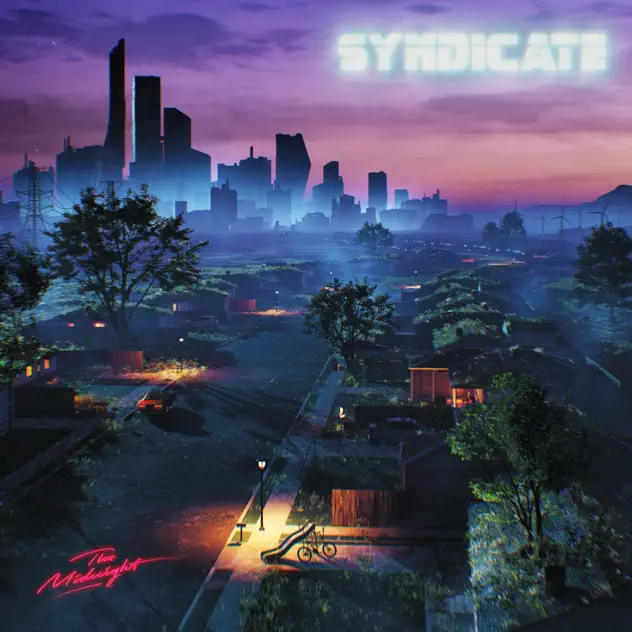
The Midnight
Syndicate
The Midnight
Syndicate
- release date /2025-10-03
- country /US
- gerne /Drum&Bass, Dreamwave, Retrowave, Synth Pop, Synthwave
The 6th album from Los Angeles synthwave duo The Midnight.
Formed in 2012 by producer/composer Tim McEwan and singer-songwriter Tyler Lyle, the duo first defined their signature on “Endless Summer,” merging 1980s-leaning electronic textures with emotive vocals and lyrical saxophone. While early synthwave was largely instrumental, Lyle’s presence has often been cited as a defining factor in bringing a more song-driven dimension to the genre, helping establish the project as one of its central acts.
In recent years, The Midnight have expanded their palette through the “Kids” trilogy—“Kids,” “Monsters,” and “Heroes”—incorporating elements of lo-fi and ’80s rock. This latest work appears to synthesize those explorations, balancing a broader stylistic reach with a noticeable return to the atmosphere of earlier releases such as “Endless Summer” and “Nocturnal,” ultimately functioning as a cohesive summation of their trajectory.
This direction is best exemplified by the lead single, #15 “Love is an ocean.” Over a pulsing electronic beat, synthesizers shimmer like starlight reflecting on a midnight sea as Tyler Lyle’s smooth vocals refrain. The arrangement reaches its peak after a break, where a melancholic saxophone cuts through the silence—a signature move that remains their true essence. It serves as an ideal introduction for those encountering their music for the first time.
A melancholic atmosphere permeates the remaining tracks, strengthening the album's cyber-punk worldview. Several songs particularly lean into their early aesthetic. #3 “Runaways” is a dance tune featuring guest Bonnie McKee, whose powerful yet transparent vocals sing of a thirst for freedom. The uplifting saxophone in the final stretch is particularly striking and will likely resonate with fans of the “Nocturnal” era.
#12 “Fatal Obsession” features Jupiter Winter, using a downtempo, sorrowful ensemble to depict the shadows of romantic obsession. The restrained saxophone accompaniment adds depth to the melancholic mood. Jupiter Winter, the duo of Lelia Broussard and Royce Whittaker, has notably become a key collaborator in both the production and live performances of The Midnight in recent years.
However, the album suggests more than just a nostalgic retreat. On #10 “First Night in Paris,” featuring dark synth heavyweight Carpenter Brut, the duo delivers an aggressive assault of heavy bass and sharp beats. This is followed by #11 “Afterglow pt. 2,” which introduces the sharp rhythms of drum and bass, showcasing an approach that transcends traditional synthwave frameworks.
#16 “Sanctuary” is a grand ballad that evolves from a piano accompaniment into a multi-layered synth symphony. Progressing in 7/8 time before shifting into a dance beat, the track feels vividly cinematic. The line “Hold me til the world fades away,” delivered through a trembling vocoder, sounds like a final message archived by humanity in a collapsing world.
The closing track, #17 “Summer’s Ending Soon,” concludes the narrative with soft vocals that ripple like a calm sea. The title appears to signify a milestone in the journey that began with their debut, “Endless Summer.”
With sophisticated production, diverse arrangements, and matured vocal performances, this work reaches a peak in their career quality. By reconstructing their early sound while pointing toward new horizons, it offers a potential future for a genre that can sometimes fall into formulaic patterns. Like the neon lights of a city, their sound continues to cast a hopeful glow.
It is also worth noting that they have moved beyond the typical constraints of the genre by evolving into a full-band live act. While there are currently no scheduled performances in Japan, it is hoped that this work will serve as a catalyst for their sound to reach a wider audience across the region.
MINAKEKKE
Anti Past-Future
MINAKEKKE
Anti Past-Future
- release date /2025-04-16
- country /Japan
- gerne /Darkwave, Dream Pop, Electronic, Gothic, New Wave, Trip Hop
The third album from Japanese singer-songwriter MINAKEKKE.
MINAKEKKE is the solo project of Yuim Minako. Her 2017 debut “Tangled” introduced a melancholic sound shaped by shoegaze, new wave, and gothic elements, while 2022’s “Memorabilia” marked a shift toward a more electronic approach. Released nearly three years later, “Anti Past-Future” consolidates these trajectories while suggesting a further leap in both scope and ambition.
Regarding the album, MINAKEKKE has commented:
“Resisting both the past and the future ultimately affirms the ‘now’—and simply living in the present, that alone is enough.”
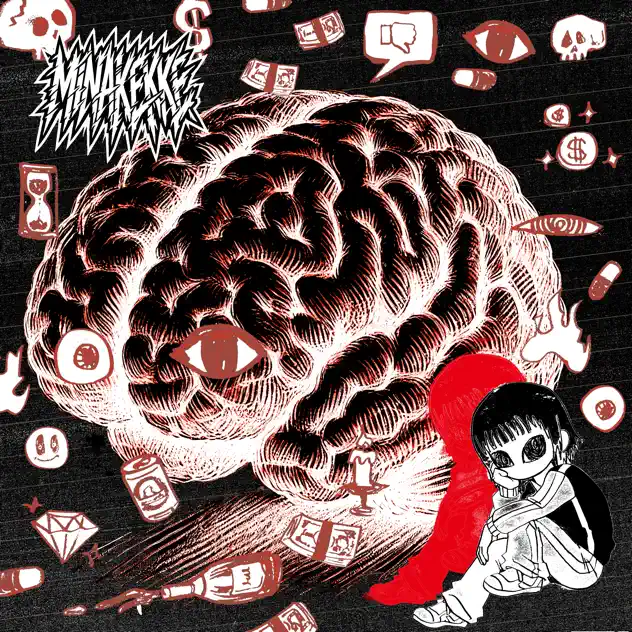
This perspective is echoed in the artwork, where symbols of insatiable desire—cash, jewelry, alcohol—alongside a sandglass, disembodied eyes, and skulls encircle a brain. These motifs may be read as reflections of contemporary existential pressures, while also implying a will to confront the present and liberate the self from such constraints.
Musically, the album is notably expansive. Her graceful and delicate vocals at times recall Elizabeth Fraser of Cocteau Twins, while occasionally revealing an eccentricity akin to Kate Bush. Guitars imbued with a 4AD-like ethereal quality coexist with pulsing, ’80s-inspired beats, evoking strong shades of goth and darkwave. At the same time, the incorporation of rigid electronic rhythms suggests an increasing affinity with club-oriented production. Compared to her previous work, the stylistic breadth has expanded to a point where it resists easy categorization.
Several tracks may particularly resonate with listeners drawn to darker aesthetics. #2 “Wheels” layers shimmering guitar arpeggios over a cold, steady four-on-the-floor beat, with vocals that glide lightly above the mix, evoking a futuristic dance sensibility reminiscent of Grimes or Crystal Castles. #6 “TERRIBLE” stands among the album’s most overtly horror-tinged moments, its ominous synth textures recalling the unsettling atmosphere associated with John Carpenter. #8 “C/FALL” features reverberant guitars intertwined with an ennui-laden vocal, suggesting parallels to Slowdive’s “Sugar for the Pill.” As the track progresses, it shifts into a softer four-on-the-floor groove, with layered vocals forming a choral effect that subtly conveys a sense of emotional vacancy. #9 “Alright” presents an ’80s-style synth-pop texture imbued with a faintly shadowed Japanese sensibility, bearing some resemblance to a modern reinterpretation of Akina Nakamori’s “Fushigi,” while also aligning with the recent global resurgence of darkwave.
From her early folk-oriented beginnings, MINAKEKKE has continuously evolved, navigating dream pop, shoegaze, gothic, darkwave, and club music with increasing fluidity. This progression resembles an ever-expanding architectural process—layered, iterative, and open-ended—yet consistently anchored by a melancholic and dark tonal core. The album stands as a defining statement of MINAKEKKE, uniting its vividly distinct tracks through her singular and commanding vocal presence.
While her live performances a decade ago centered on acoustic guitar and looping techniques, even then her vocal ability set her apart. Given the substantial evolution of her sound since, it remains compelling to consider how these newer compositions translate in a live setting.
As a side note, an early track titled “Ekho,” performed during that period, remains particularly memorable for its emotionally resonant melody, though it appears not to be currently available on streaming platforms. Its eventual reemergence would offer an intriguing point of reconnection with her artistic origins.
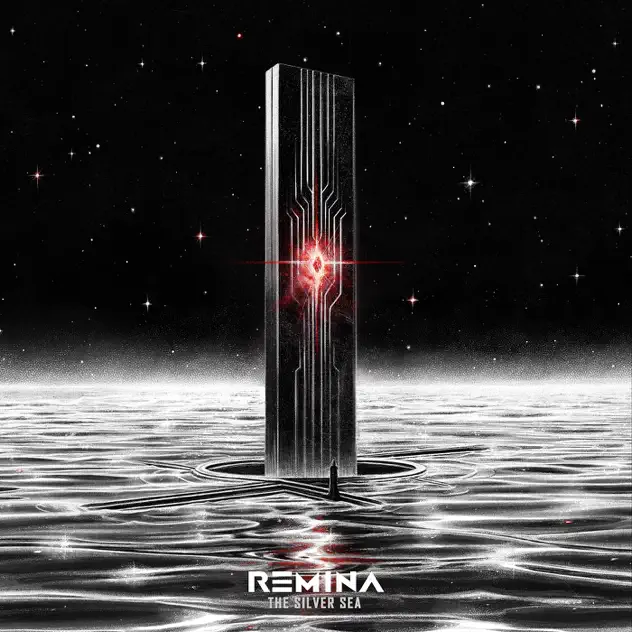
REMINA
The Silver Sea
REMINA
The Silver Sea
- release date /2025-10-24
- country /New Zealand
- gerne /Ambient, Doom Metal, Drone, Gothic Metal, Post-Metal
The second album from New Zealand cosmic doom project REMINA.
Formed in 2021 in Dunedin, the project is led by Mike Lamb (Sojourner) and Heike Langhans (Sojourner, ex-Draconian, ex-ISON). Lamb handles guitars, bass, and synthesizers, while Heike takes on vocals, lyrics, synthesizers, and even the artwork. With the addition of drummer Shayne Roos on this release, the project now operates as a trio.
Compared to Heike’s earlier work with ISON, the sound here appears more concise and accessible, yet its vast, drifting sense of scale remains intact. Across the album, a striking contrast emerges between boundless darkness and the distant shimmer of stars, rendered with a cinematic sense of space.
At the core of the record is #5 “Theia”. Layered atmospheric guitars and synthesizers intertwine with Heike’s ethereal voice, evoking a vast nebula suspended in the depths of space. The track stands as a defining moment for REMINA, suggesting the full scope of their sonic identity.
The guest contributions also prove effective. On #2 “Algol” a duet with Mick Moss of Antimatter unfolds with measured restraint. His warm mid-range contrasts with Heike’s fragile delivery, their voices flickering in tandem like the variable star Algol. The pairing further suggests a mythic duality, reminiscent of Perseus and Medusa, reinforcing the track’s thematic depth.
Elsewhere, the album ventures beyond the framework of their prior projects. #6 “Io” introduces a rigid industrial beat—at times echoing Heike’s darkwave project :LOR3L3I:—while #7 “Silence and the Silver Sea” leans into a more dynamic progression, recalling elements of gothic rock and early gothic metal.
Beyond her vocal performance, Heike’s role as the visual architect of the project further underscores her creative range. Like Voyager continuing its journey into uncharted space, her work here suggests an ever-expanding artistic trajectory.

The Deadly Affair
Visions Through The Sense of Silence
The Deadly Affair
Visions Through The Sense of Silence
- release date /2025-05-16
- country /Chile
- gerne /Alternative-Rock, Darkwave, Drone, Experimental, Funeral Doom, Gothic, Noise Rock, Sadcore, Shoegaze, Slowcore
The debut album from Chilean experimental rock band The Deadly Affair.
Based in Santiago, the band completed the record through a meticulous year-long collaboration with producer Atom™, a figure who has long been associated with pushing the boundaries of experimental music.
At its core, the sound is shaped by the interplay between the brooding resonance of sustained electric guitar tones and the delicate phrasing of acoustic guitar. Around this axis, Santiago González Lihn’s incantatory vocal delivery, shamanic drumming, subterranean bass, and spectral synth textures gradually accumulate, forming a deeply introspective and immersive soundscape—one that suggests an endless drift across a fog-laden, ashen expanse.
Incorporating elements of gothic, darkwave, drone, shoegaze, slowcore, and even funeral doom, the band’s hybrid approach resists easy categorization, instead asserting a distinct and cohesive sonic identity.
The album stands as a compelling example of the depth and unpredictability found within Chile’s underground scene.
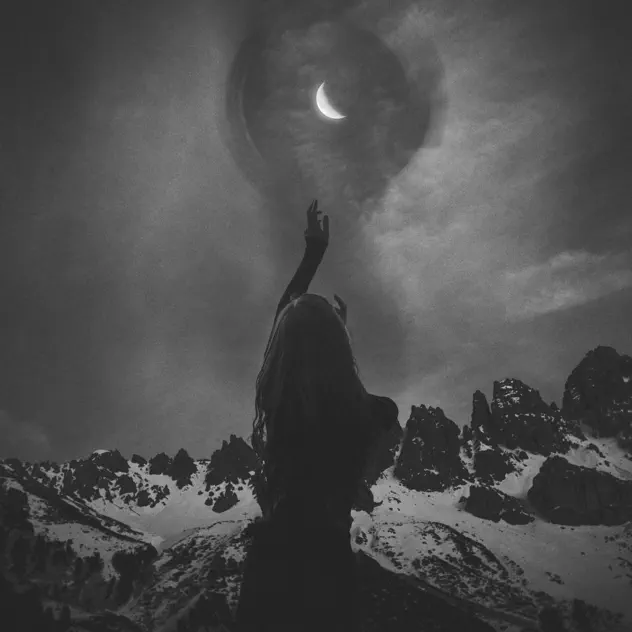
ELLEREVE
Umbra
ELLEREVE
Umbra
- release date /2025-11-07
- country /Austria
- gerne /Alternative Rock, Black Metal, Doomgaze, Folk, Post-Metal, Shoegaze
The second album from Austrian solo project ELLEREVE.
ELLEREVE is the project of multi-instrumentalist Elisa Giulia Teschner. The name combines “El,” drawn from her given name, with “Reve,” derived from reveal, while also encompassing the French phrase elle rêve (“she dreams”). Titled “Umbra”—Latin for “shadow”—the album frames shadow as a mirror of the self, tracing a process of confronting and ultimately accepting one’s inner world.
Sonically, the record appears to channel the influence of artists such as Agalloch, Amenra, and Holy Fawn, translating their sensibilities into a personal vocabulary. Ritualistic undertones rooted in traditional folk are layered with the dense textures of post-metal, shoegaze, and black metal, with blast beats and screamed vocals deployed boldly. The dynamic contrast between stillness and overwhelming volume suggests a heightened sense of catharsis, rendering buried emotions with a striking immediacy.
Guest contributions from Michael J.J. Kogler (Harakiri for the Sky) and David “Eklatanz” Conrad (Heretoir), alongside mastering by Markus Stock (Empyrium), add further depth, connecting the work to a broader lineage within the European dark metal sphere.
A key moment arrives with the lead single, #7 “The Veil of Your Death.”Built around black metal–style rapid-fire drumming, the track juxtaposes J.J.’s visceral screams with Elisa’s clean vocals, unfolding with a dramatic midsection that briefly withdraws into quietude before surging back. Elsewhere, #3 “Crawl” emphasizes a sinking, weight-laden post-metal presence, while #9 “Lost in Longings” recalls a more pastoral and delicate melodic sensibility, resonating like a quiet plea for light.
Across its shifting compositions, the album brings into focus the instability and complexity of the human psyche. Heard in solitude—particularly within the stillness of night—it may serve as a conduit for engaging with personal conflict, anger, or trauma, and, perhaps, for moving toward a sense of release.
Listeners drawn to the worlds of Dead Can Dance, Shedfromthebody, or Chelsea Wolfe will find this work compelling.
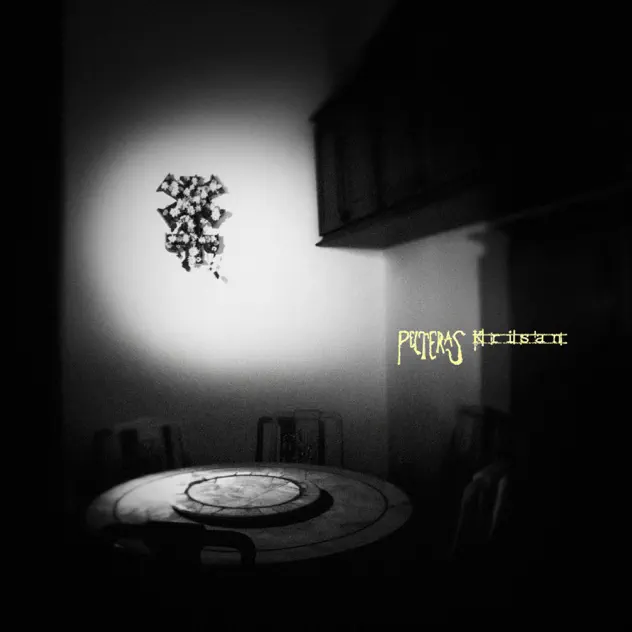
Pelteras
Krisan
Pelteras
Krisan
- release date /2025-08-29
- country /Indonesia
- gerne /Alternative Rock, Deathrock, Gothic Rock, Indie Rock, Post-Punk, Post-Rock
The first EP from Indonesian post-punk/deathrock band Pelteras.
Formed in Jakarta around mid-2016, the current lineup consists of Techa Aurellia (vocals), Achmad Raditya (drums), Adam Pribadi (guitar), Haecal Benarivo (guitar), and Adam Bagaskara (bass). Their previous release, Peranjakan, was notable for its aggressive post-punk/deathrock sound, whereas Krisan suggests a shift toward down-tempo, atmospheric textures. The music blends introspective gloom with moments of gentle calm.
New member Haecal Benarivo contributed to the songwriting, adding layered guitar textures that bring additional depth to the sound. Track #5, “Krisan,” is particularly emblematic: opening with a light, indie-rock-style guitar riff, it offers a glimpse of hope within the prevailing melancholy. The vocals, entirely in Indonesian, further accentuate the band’s distinctive character. As the members note, this EP feels like just the beginning, hinting at further evolution.
Fans may also want to explore vocalist Techa Aurellia’s work with post-metal band Amerta.
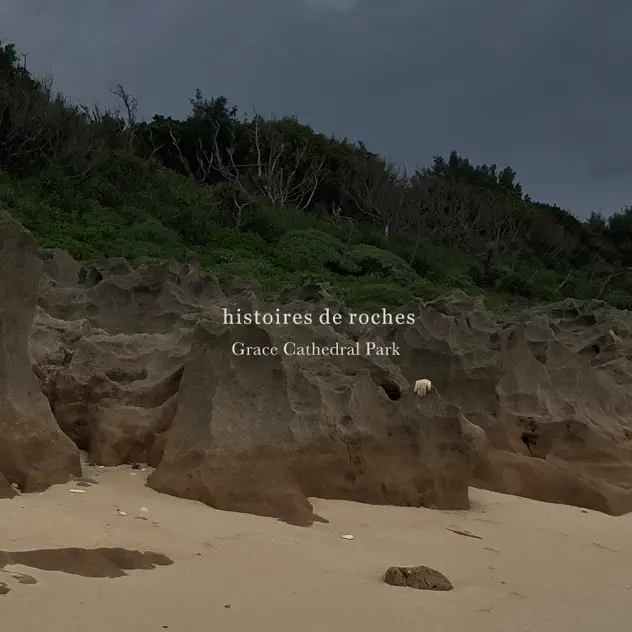
Grace Cathedral Park
histoires de roches
Grace Cathedral Park
histoires de roches
- release date /2025-10-01
- country /Japan
- gerne /Ambient, Dream Pop, Drone, Ethereal Wave, Experimental, Folk, Slowcore
The second album from Tokyo-based ambient folk band Grace Cathedral Park.
Formed in 2017, the trio currently consists of Mayuco Inui (vocal), Shuma Ando (guitar, shruti box, bass VI, field recording, keyboard), and Taichi Shimokobe (bass, bass VI, synthesizer). The band takes its name from a song by the American slowcore group Red House Painters.
On this record, the group incorporates the Indian traditional instrument the shruti box alongside field recordings, building delicate soundscapes within a drumless arrangement. The result is a soundscape reminiscent of a mist-covered forest—hushed, immersive, and quietly otherworldly. Compared to their previous work, elements of traditional music are more pronounced here, and the Japanese lyrics often resonate like the folk songs of some distant, half-imagined land.
A standout moment arrives with #8 “birth.” Flowing seamlessly from the chorus-driven and culturally ambiguous #7 “rappel,” the piece unfolds around a shruti box drone, over which a lullaby-like vocal gently drifts. The crackle of a campfire blends into the soundscape, slowly guiding the listener into a state of deep meditation, as if participating in an ancient ritual.
Across its 45-minute runtime, the album feels like a quiet journey of the soul—music that captures fragments of beautiful landscapes from around the world and transforms them into sound. Listeners who appreciate artists such as Ethel Cain, Ichiko Aoba, or Yoko Kanno should definitely take note.

Warper
Something, Sometime
Warper
Something, Sometime
- release date /2025-10-03
- country /US
- gerne /Alternative Rock, Doomgaze, Indie Rock, Progressive, Shoegaze, Slowcore
The debut album from Colorado shoegaze band Warper.
Production, mixing, and mastering were handled by Corey Coffman, known for his work with Trauma Ray and Soft Blue Shimmer.
Operating as a duo—Jack McManaman (guitars, bass, synths, string arrangements) and Adam Gilsdorf (drums)—Warper describe themselves simply as “Colorado downer” in their Instagram bio, an apt shorthand for the band’s distinctly somber aesthetic. Rather than pursuing the heavy shoegaze lineage associated with acts such as Nothing or Deftones, the group leans toward a more introspective and melancholic sound.
Jack McManaman’s fragile, sorrow-tinged vocals intertwine with lyrics reflecting loneliness, loss, personal inadequacy, and the tensions within love. Together they guide the listener into a deeply reflective emotional space. While at times oppressive walls of guitar noise surge forward, the arrangements also make room for passages of delicate suspension reminiscent of slowcore, gently tempering the album’s emotional weight. This interplay between restraint and release gives the record much of its dynamic character—an approach that also reflects Corey Coffman’s refined production sensibilities.
The closing highlight arrives with #9 “Something to Be Learned from a Rainstorm.” The track begins quietly with luminous arpeggios before erupting into a cathartic swell of distortion. Yet the song does not end there: it recedes once more into a softer passage before building toward a final, second crescendo, concluding the album with a strikingly dramatic two-stage structure.
Elsewhere, moments in #3 “Forever” and #6 “Jinx” reveal vocal phrasing that occasionally recalls Jonas Renkse of Katatonia—a detail that may resonate with listeners from the progressive and melancholic metal sphere. Katatonia themselves have occasionally touched on dream pop textures in their catalogue, and Warper’s sound at times invites speculation about how that sensibility might evolve if taken further into shoegaze territory.
With its brooding atmosphere and inward-looking lyricism reinforcing one another, the album presents a finely crafted example of melancholic shoegaze, capturing emotional fragility with notable compositional control.