


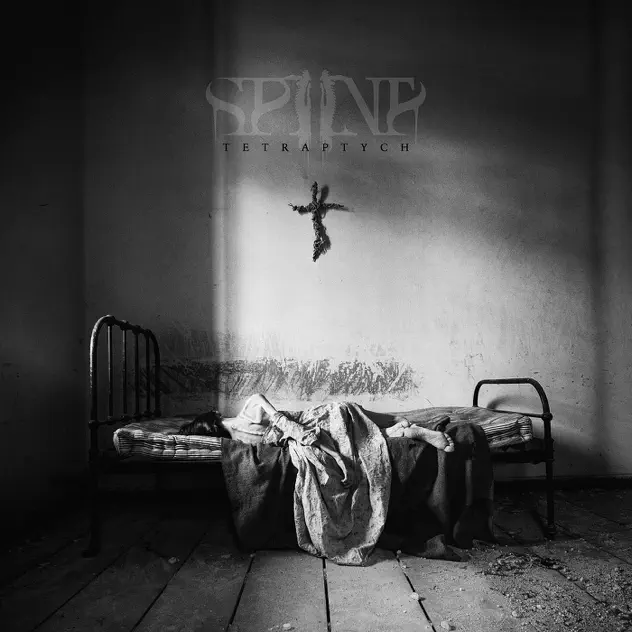
Spiine
Tetraptych
Spiine
Tetraptych
- release date /2025-03-27
- country /Australia
- gerne /Blackened Doom, Depressive Black Metal, Doom Metal, Doomgaze, Funeral Doom, Post-Rock
The debut album from Australian blackened doom metal duo Spiine.
Spiine was formed as a collaboration between Virgin Black guitarist Sesca Scaarba (Samantha Escarbe) and former Ne Obliviscaris vocalist Xen (Marc Campbell). The band name, meaning “spine,” symbolizes the fusion of their creative cores and a shared commitment to convey the dark, miserable despair that defines their music. The double “i”s in both the band name and track titles emphasize this mutual bond.
The album features drums by Waltteri Väyrynen (Opeth, ex-Paradise Lost) and bass by Lena Abé (My Dying Bride), assembling one of the most formidable lineups in modern doom. While Virgin Black was known for orchestral grandeur and choral arrangements, Spiine strips back embellishments to focus on guitar-driven funeral doom. Xen’s expressive screams and growls depict sorrow, pain, and despair, plunging listeners into an uncompromisingly cold and merciless dark world.
The album unfolds over four intense tracks:
#1 “Myroblysiia”
Blends funeral doom-style long tones with brooding tremolo riffs, weaving doomgaze, post-rock, and DSBM influences. Introductory piano echoes under mournful guitars reminiscent of MONO performing a requiem. As heavy long tones emerge, solemn orchestral lines merge with Xen’s guttural roar, pulling the listener into the abyss.
#2 “Glaciial”
Pairs crushing, oppressive guitars with Xen’s growls in a relentlessly dark doom landscape. Heavy strings bring a fleeting glimmer of light, but Sesca’s guitar and Xen’s vocals soon drown it in darkness. The melancholic guitar work toward the end stands out as a highlight.
#3 “Oubliiette”
Uses tremolo riffs effectively to create a hybrid of funeral doom and DSBM. Layered orchestral textures contribute to what is perhaps the album’s most “gaze”-infused track.
#4 “Wriithe”
Opens with ghostly moans, crawling through shadowed, oppressive riffs. A quiet, ethereal interlude offers a brief light, before shifting into black metal-inspired bursts. The track closes with mournful, requiem-like melodies, returning the spirits to the abyss.
True to its title Tetraptych, meaning “a series of four panels,” the album delivers a concentrated one-hour journey across four elaborate compositions—an exceptional treat for fans of dark music. While firmly rooted in funeral doom, its relatively melodic accessibility may appeal to listeners of dark doom-gaze bands such as FVNERALS and Presence of Soul.
As of December 2, 2025, Lena Abé (My Dying Bride) officially joined as a full member. This indicates that the project will continue, and fans should stay tuned for future developments.


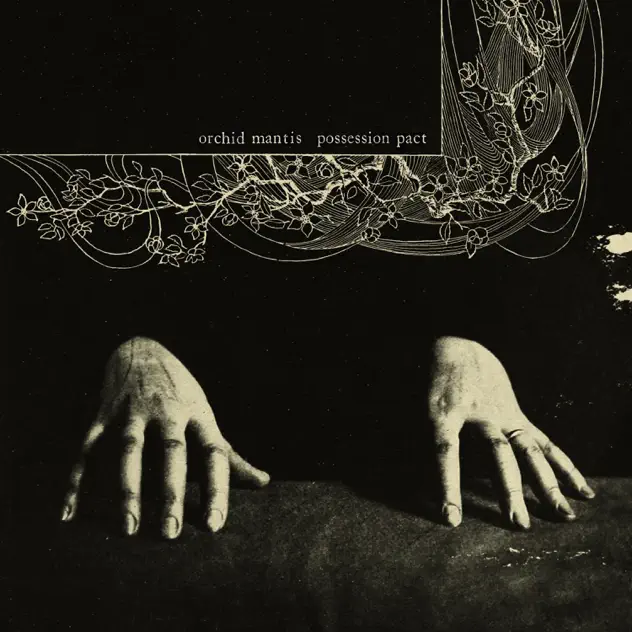
Orchid Mantis
Possession Pact
Orchid Mantis
Possession Pact
- release date /2025-04-25
- country /US
- gerne /Ambient, Dream Pop, Indie Pop, Slowcore
he 13th album from Atlanta-based lo-fi dream pop artist Orchid Mantis.
Orchid Mantis is the solo project of singer-songwriter Thomas Howard. Previously known for creating lo-fi, nostalgic indie pop and ambient music that gently lulled listeners into dreamlike states, this release shifts the focus toward the brooding slowcore of the ’90s, evoking artists such as Low, Bedhead, and Codeine.
Guitars drenched in deep reverb ripple like rain in the twilight, while Thomas’s vocals emerge ghostlike from the sparse arrangements. If past works felt like napping in a sunlit meadow, this album might be likened to waking up in a morgue at midnight.
A pervasive cold yet sweet melancholy fills each track, making it ideal for sinking into quietly. Standout track #4 “All The Passing Days” features a funeral-like, wistful melody that quietly turns beautiful memories to ash.
The consistently slow tempo may feel flat to some listeners, but the careful alternation of vocal and instrumental pieces provides subtle rises and falls that maintain interest. The artwork already hinted at something unusual, but the musical transformation exceeded expectations.
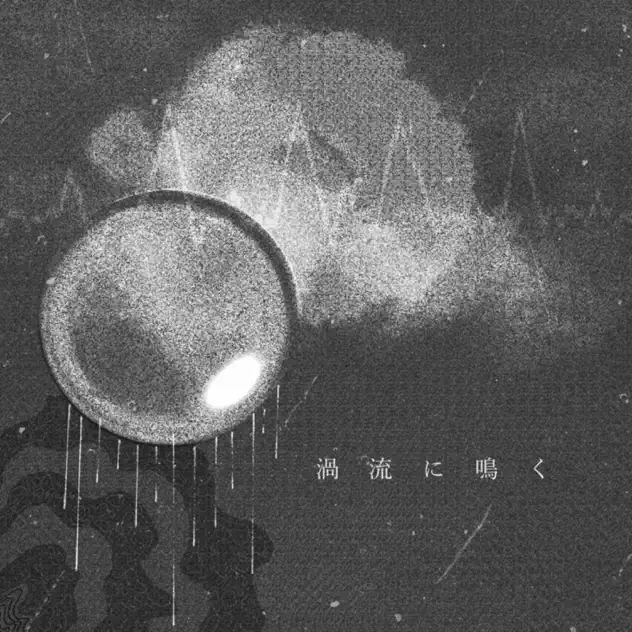
Sanzameku
Karyu Ni Naku
Sanzameku
Karyu Ni Naku
- release date /2025-03-29
- country /Japan
- gerne /Alternative Rock, Ambient, Grunge, Post-Rock, Shoegaze, Slowcore
The first EP from Osaka-based shoegaze / alternative rock band Sanzameku.
Formed on March 26, 2023, Sanzameku’s debut EP features Pen (guitar/vocals), Akane (guitar), Sima (bass), and yuyA (support drums). While often framed within shoegaze, the band’s sound appears to extend well beyond genre boundaries, weaving together a range of expressive elements into a distinctly dark and emotive aesthetic.
Fragile, delicate passages recall the ethereal qualities of Sigur Rós, while the tension between poetry reading and emotional surges suggests parallels with envy. At times, Pen’s delivery—singing subdued, shadowed emotions in Japanese—may also bring to mind Tsukiko Amano. Rather than settling into conventional shoegaze tropes, these influences intersect to form a highly individual sonic world. The contrast between stillness and eruption is particularly striking, guiding the listener through shifts that feel as expansive as a journey from sunlit grasslands to the depths of a darkened sea.
Central to this dynamic is Pen’s vocal performance. Moving fluidly with the band’s dramatic rises and falls, the vocals range from gentle whispers to piercing, emotionally charged cries that cut through walls of sound. The lyrics, written in Japanese, circle raw emotions such as sorrow, pain, and grief, their nuances heightened by the language’s natural shading and cadence.
Sanzameku – “Karyu Ni Naku” Track-by-Track
#1 “Koubou”
An elegant introduction in which light-filled guitar tones merge with fragile whisper vocals, setting a luminous yet restrained opening mood.
#2 “Zanmei”
Built on a slow, post-rock-like progression, the track gradually increases tension before releasing it in a cathartic surge of beautiful noise.
#3 “=rand(scp)”
Swirling noise collides with a bleak melody, cutting sharply across the listener like a cold blade. The darkest piece on the EP; the title is reportedly read as “Dummy Scape.”
#4 “Ibuki”
A boundary-pushing track driven by tribal rhythms that draws the listener into a trance. The cascading guitar lines are strikingly radiant, approaching something almost sacred in tone.
#5 “Shizuku No Naka No Suisei”
A delicately balanced soundscape on the verge of collapse, underscored by the repeated phrase “I didn’t want to know.” Sudden waves of heavy sound break the calm before receding again, intensifying the song’s sense of longing.
#6 “Fuyuu” (CD-only bonus track)
Featuring Mai Kuroda of Okayama shoegaze band little lamplight, this track showcases lush, heavy shoegaze at its most expansive. The dense textures created by triple guitars and a strong melodic core make a compelling case for the CD edition alone.
Across six tracks, light and darkness, beauty and madness, stillness and motion intersect in constant flux. This EP offers a concentrated expression of Sanzameku’s aesthetic vision. In addition, venue-exclusive demo releases reportedly include several live staples—each worth seeking out for those attending shows.
Following this release, Nagisa Kanzaki officially joined on drums, marking the band’s full-scale launch. True to the meaning of their name—clamor—Sanzameku appears poised to raise a collective voice and energize the Japanese shoegaze landscape.
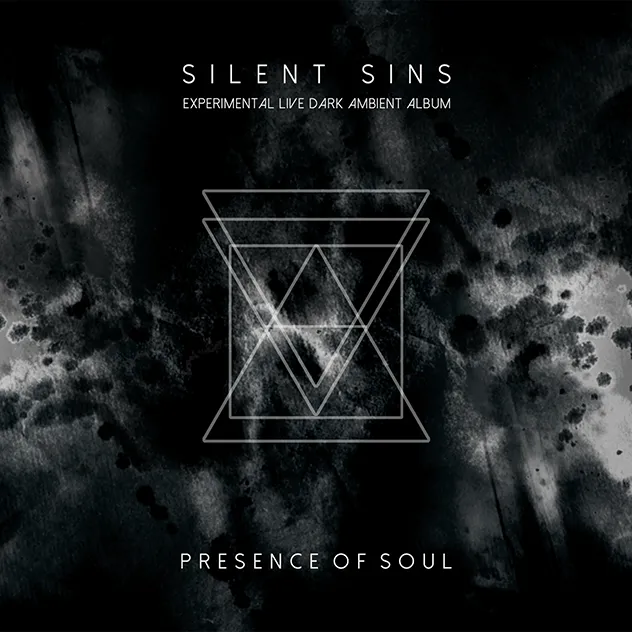
Presence of Soul
Silent Sins
Presence of Soul
Silent Sins
- release date /2025-05-03
- country /Japan
- gerne /Ambient, Dark Ambient, Inprovisation, Noise, Post-Rock
The live album from Tokyo-based post-metal / doomgaze band Presence of Soul.
Recorded on July 24, 2024 at Kichijoji NEPO, this release documents an improvised noise and dark ambient performance by a three-piece lineup: Yuki (vocals, synthesizers, noise), Yoshi (guitar), and Takurow (bass). Despite the common assumption that dark ambient equates to something merely “dark and dull,” this set unfolds as a surprisingly expansive experience—an approximately 30-minute journey that feels closer to drifting through a blackened cosmos.
#1 “Silent” reveals a delicate, melodic side of Presence of Soul through a meditative post-rock framework. Against a backdrop of soft noise, poetry reading, spectral clean vocals, and layered guitars slowly merge, evoking a mysterious, star-filled galaxy. The piece balances restraint and atmosphere, allowing subtle emotional contours to surface without force.
#2 “Board the Shipwreck – Drift” shifts the tone dramatically. Anxiety-inducing, noisy guitar textures intertwine with mantra-like vocals, suggesting a darker, more corrupted counterpart to Dead Can Dance. In the latter half, distorted guitars and increasingly unhinged vocal expressions collide, culminating in an onslaught of truly menacing noise. It can be approached in multiple ways: at extreme volume for full immersion, in complete darkness with eyes closed, or even at lower levels for listeners less accustomed to harsh sound. Each perspective reveals different facets of the performance.
As a live document, the recording captures only part of the physical impact. The original performance reportedly took place in near-total darkness, with the musicians barely visible and only VJ visuals cutting through the void, creating a disorienting sensation of suspension rather than grounded presence. In particular, the bass work stands out—its sub-bass frequencies were powerful enough to transmit vibrations through the floor and into the body. While that physical force cannot be fully replicated on record, the intensity remains palpable.
This release is available exclusively on CD and will be discontinued once sold out. Purchasers can also download audio accompanied by the visuals used during the performance. With a system capable of high-volume playback, it offers an experience that comes remarkably close to the live setting. For those drawn to immersive, boundary-pushing sound, this is a document well worth securing.
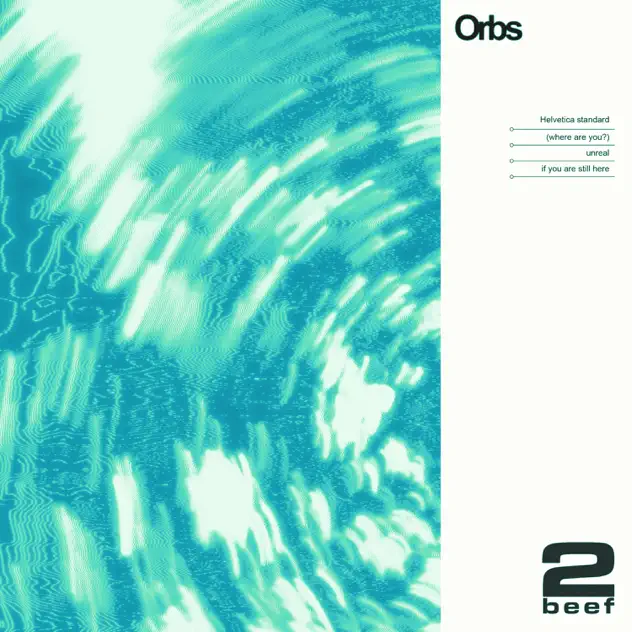
2beef
Orbs
2beef
Orbs
- release date /2025-07-02
- country /Japan
- gerne /Alternative Rock, Grunge, Nu Gaze, Post-Rock, Shoegaze
The second EP from Tokyo-based shoegaze band 2beef.
On their first EP, the band surprised many listeners by absorbing a wide spectrum of influences—from US heavy shoegaze in the vein of Nothing and Whirr to 2020s Nu-Gaze—while even incorporating elements of breakcore. Just as distinctive is their worldview, which draws heavily on otaku culture rooted in 1990s–2000s anime and video games. Formerly a trio, 2beef is now officially a duo following the departure of their drummer, consisting of Ueda (guitar/vocals) and Yoh Yanatori (bass), the latter also responsible for the band’s artwork and merchandise design.
This EP unfolds as a concept work built around the theme of isekai—otherworldly reincarnation—inviting the listener to step into a self-contained narrative. With that in mind, let us dive in.
2beef – “Orbs” Track-by-Track
#1 “Helvetica standard”
Following a dreamlike intro, heavy guitars intertwine with gentle vocals to draw the listener into a state of intoxication. The atmospheric passages subtly evoke post-rock textures, offering a sense of comfort akin to being enchanted by magic. The title “Helvetica standard” functions both as an otaku reference—reportedly derived from a manga by Keiichi Arai—and, perhaps, as a design-oriented nod to the Helvetica typeface and its ubiquity.
#2 “(where are you?)”
A sound collage in which pale layers of guitar dissolve into piano tones and whispered voices, blurring the boundary between reality and fantasy. The faint echo of “sayonara” at the end lingers, quietly planting a sense of emptiness.
#3 “unreal”
A slow-burning piece of heavy shoegaze that patiently weaves melancholy. Amid towering walls of sound, an aching vocal line cuts through, tightening its grip on the listener. This track stands out as the EP’s emotional centerpiece.
#4 “if you are still here”
While inheriting the heaviness of the previous track, this closing song introduces a subtle openness, as if light were breaking through the clouds. A fragile sense of hope hovers as the story comes to an end. “If you are still here”—did the protagonist return to the original world, or remain elsewhere? The question is left unresolved.
Compact at four tracks and roughly twelve minutes, the EP nonetheless offers a dynamic arc that actively stimulates the imagination. Isekai narratives are plentiful in popular culture, but this work encourages each listener to envision their own version of the story.
Artwork and Visual Identity
Another notable aspect of 2beef is their striking visual presentation. The artwork is unified by Helvetica-style sans-serif typography and a blue-centric color scheme, effectively channeling a Y2K digital aesthetic. This is particularly intriguing given that Yanatori’s personal art practice often leans toward more organic forms—an intentional contrast worth exploring further. Yoh Yanatori (Instagram)
Live Activities and Outlook
With support members on drums and guitar, 2beef resumed live activities on August 29, 2025. Their presence and sound reportedly align closely with the forefront of contemporary US shoegaze, suggesting strong potential for future exchanges with overseas acts.
Fans of Nothing, Whirr, Leaving Time, Trauma Ray, or Glare should find much to appreciate here.

Blackwater Holylight
If You Only Knew
Blackwater Holylight
If You Only Knew
- release date /2025-04-18
- country /US
- gerne /Doomgaze, Post-Metal, Progressive, Psychedelic Rock, Shoegaze,
The first EP from Oregon-based psychedelic doom rock band Blackwater Holylight.
Formed in Portland in 2016, the all-female quartet has steadily drawn attention for its exploratory approach to heavy music. The current lineup consists of Sunny Farris (bass/guitar/vocals), Sarah McKenna (synthesizers), Mikayla Mayhew (bass/guitar), and Eliese Dorsay (drums). After establishing a strong presence with their self-titled debut album “Blackwater Holylight” (2018)—defined by a sultry, narcotic blend of psychedelia and stoner rock—the band pushed further into heaviness on “Veils of Winter” (2019). Their third album, “Silence/Motion” (2021), expanded the palette again, incorporating violin and ritualistic vocal elements to explore a darker, more somber atmosphere. Each release has marked a clear evolution, consistently offering listeners a sense of discovery.
On this EP, the band appears to add another dimension to their established framework. Alongside the weight of Black Sabbath, the mysticism of Dead Can Dance, the haze of psychedelic rock, and progressive rock’s structural elegance, shoegaze textures are introduced as a new layer—suggesting the beginning of a fresh chapter rather than a radical break.
That shift is most evident on #2 “Torn Reckless.” What initially presents itself as a catchy, melody-driven pop song is soon enveloped in fiercely refracting walls of guitar noise reminiscent of My Bloody Valentine. It invites the kind of speculation one might have when imagining how Blackwater Holylight would reinterpret “when you sleep.”
#1 “Wandering Lost” opens gently with floating keyboards and vocals before unfolding into a vast soundscape driven by heavy guitars. Midway through, the song pivots into aggressive, irregular riffs, only to resolve back into its opening theme. The dynamic, progressive-minded structure stands out as one of the EP’s most compelling moments.
#3 “Fate Is Forward” leans toward a bleak fusion of slowcore and doomgaze. Ethereal vocals spread like fog, gradually obscuring any sense of orientation and pulling the listener into a state of near-disorientation.
The EP closes with a cover of Radiohead’s “All I Need.” While largely faithful to the original, the latter half is reshaped with dense, heavy guitar layers, subtly asserting the band’s own identity.
Rather than simply “going shoegaze,” each track arrives with a distinct character—four songs that feel like different gemstones cut from the same stone. The band’s adaptability suggests a kind of alchemy within the psychedelic and doom realms, and the incorporation of shoegaze textures feels less like a destination than an opening move. Listeners drawn to artists such as Iress, King Woman, or Shedfromthebody should find much to engage with here.
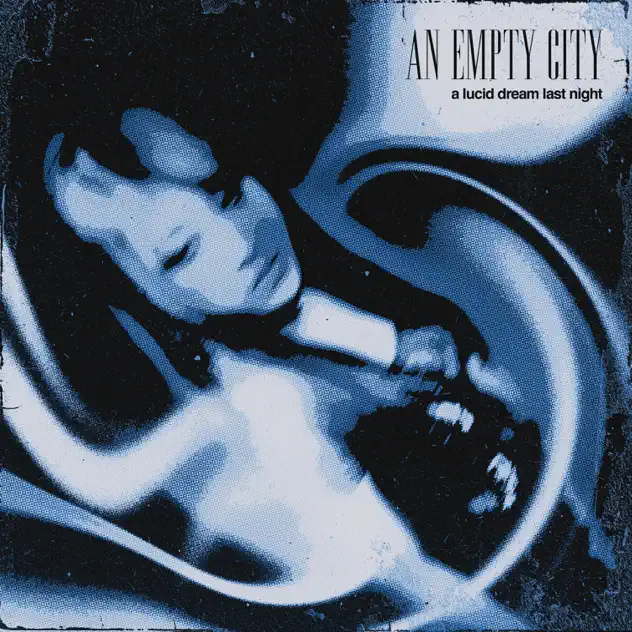
An Empty City
a lucid dream last night
An Empty City
a lucid dream last night
- release date /2025-02-28
- country /China
- gerne /Alternative Metal, Breakcore, Drum&Bass, Gabber, Hardcore, Metalcore, Nu Gaze, Shoegaze
The fourth album from Chinese metalcore band An Empty City.
Based in Guangzhou and formed in 2016, An Empty City currently operate as a four-piece consisting of Matt Huang (guitar), Goldfish (bass), Chester Tam (vocals), and Dante Sum (drums). Following a lineup change in 2022, the band’s latest release marks a clear stylistic expansion, incorporating clean vocals and more atmospheric guitar textures while actively exploring a crossover between metalcore and shoegaze.
Highlighted tracks
#1 “broken mirror”
A pivotal track that encapsulates the album’s direction, blending metalcore aggression with shoegaze’s ghostly beauty. Ferocious screams collide with fragile clean vocals, pulling the listener into a nightmarish space suspended between anguish and uneasy calm.
#2 “feather”
A melancholic, Deftones-adjacent heavy shoegaze piece that foregrounds sorrow and emotional weight. The song builds patiently before plunging into a crushing breakdown and scream in its final stretch, showcasing a metalcore-rooted sense of dynamics. It stands as one of the record’s strongest moments and a potential contender for the year’s standout tracks.
#4 “a fleeting mind captive in a shattered dream”
Opening with djent-influenced, gut-churning riffs, the track suddenly accelerates into blast beats before shifting into a dark shoegaze chorus. The contrast between oppressive guitars and delicate vocals is particularly effective.
In the latter half of the album, while metalcore remains the core framework, the band incorporates electronic elements such as breakcore, drawing listeners in with increasingly varied and dynamic arrangements.
The final two tracks close the album with lush, clean-vocal-driven heavy shoegaze, bringing the journey to an unexpectedly graceful conclusion. Although metalcore elements remain slightly dominant overall, the integration of shoegaze is handled with notable finesse, pointing toward promising future developments. Listeners drawn to artists such as the newer incarnation of fromjoy or Loathe will likely find much to appreciate here.

fromjoy
Ataraxia 19.13.8.1.19
fromjoy
Ataraxia 19.13.8.1.19
- release date /2025-06-13
- country /US
- gerne /Ambient, Alternative Metal, Electronica, Industrial, Metalcore, Nu Gaze, Shoegaze
The third EP from Texas metalcore band fromjoy.
Based in Houston, fromjoy present this release as the concluding chapter of the Icarus narrative that has unfolded since their debut EP “It Lingers.” While metalcore remains the foundation, the band further expands its palette by weaving in breakbeats, drum and bass, hyperpop, and vaporwave, pushing their hybrid style into more exploratory territory.
A major turning point arrived in August 2024, when lead vocalist Denver Dowling departed. Guitarist and backing vocalist Kellan King subsequently shifted into the role of primary vocalist. This lineup change appears to have accelerated a stylistic evolution: while maintaining the band’s metalcore–electronic fusion, fromjoy significantly increases the presence of clean vocals from guitarist Giovanni Alani. The result suggests a more melodic and atmospheric direction, with shoegaze textures now playing a visible role in shaping the sound.
Highlighted tracks
#1 “Etana”
Opening with a sample from the previous EP’s closing track “Icarus,” this brief introduction underscores the narrative continuity of the project, framing the EP as a direct extension—and conclusion—of the story.
#2 “Monochrome”
The track begins with an ethereal, electronic introduction reminiscent of new age and trip-hop, before shifting into a melancholic, heavy shoegaze passage that may recall Deftones. In the latter half, the floating ambience gives way to a sudden breakdown built on an oppressive, Vildhjarta-like riff. The prominence of clean vocals reportedly surprised some longtime listeners, though positioning this song as the lead single seems intended to signal a new chapter for the band. It stands as one of the EP’s most defining statements.
#3 “Eternal.Harvest”
Here, aggressive metalcore sections transition sharply into shoegaze-laden choruses. Dreamlike electronic layers intertwine with clean vocals, adding contrast and depth. While fromjoy have featured clean vocals before, the integration feels more organic this time, enhancing the shoegaze character of the track.
#4 “Ataraxia”
Following the metalcore–shoegaze crossover established in “Eternal.Harvest,” this track introduces an ambient passage accented by piano in its latter half. The blurred, glowing textures evoke a digital, otherworldly light, suggesting both the end of the Icarus saga and the beginning of something new.
Artwork and narrative
Viewed in release order, the artwork reinforces this transformation. “Monochrome” depicts a powerless Icarus connected by wires; “Eternal.Harvest” presents a cocoon-like state of transition; and the EP “Ataraxia” culminates in an image of rebirth, with Icarus reimagined as a radiant, winged being. The progression appears to suggest a fallen figure gaining new life and ascending once more—an apt visual metaphor for the band’s own renewal.
Worldbuilding and influences
fromjoy’s aesthetic draws heavily from early digital art, particularly the cyber visuals of the PlayStation 2 era, as well as the anime serial experiments lain. On earlier releases such as the breakcore-leaning EP “away,” the track “Digital Armageddon” even incorporates spoken lines from the anime. Giovanni Alani’s frequent appearance onstage in lain T-shirts further hints at a deep personal affinity. Notably, the illustration used for the first pressing of the band’s self-titled vinyl—bearing a striking resemblance to Lain—was reportedly created after the designer instinctively sensed that influence from the band’s sound alone.
The enduring global reach of lain continues to resonate in unexpected ways.
Taken together, this EP reads as a declaration of rebirth for fromjoy. Whether the band ultimately becomes a bridge between metalcore and shoegaze remains to be seen, but their trajectory is compelling. Compared with more extreme hybrids such as Kardashev’s deathgaze, fromjoy’s approach appears more accessible to traditional shoegaze listeners, which may broaden its appeal. As artists exploring this crossover continue to increase, this strain of Nu-Gaze-adjacent metalcore could well be the next movement to watch.
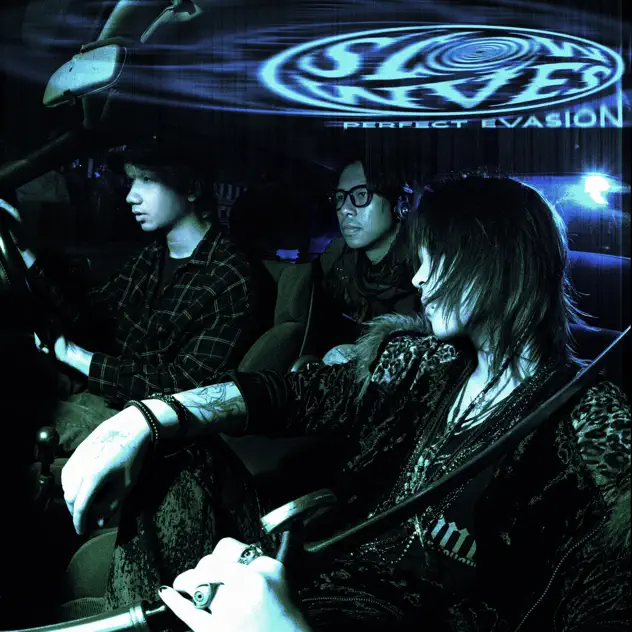
Slowwves
Perfect Evasion
Slowwves
Perfect Evasion
- release date /2025-06-04
- country /Thailand
- gerne /Alternative Rock, Dream Pop, Grunge, Shoegaze
The debut album from Thai shoegaze band Slowwves.
Formed in Bangkok in 2023, Slowwves released this first full-length via Japan’s long-established label P-VINE. The current lineup consists of Jill (Iya Ngoentaweekoon) on vocals and guitar, Peem (Juckapob Lamulpak) on guitar, and Jump (Pawaris Chotnikhom) on drums. Peem initially met Jill through a mutual friend and was drawn to her musical sensibility; the band solidified its present form when Jump joined following a Slowdive tribute event.
Though all members are still in their early twenties, Slowwves quickly attracted attention among shoegaze listeners with their debut single “Anywhere Else,” released on March 1, 2024. The band’s name derives from “slow-wave sleep,” evoking the calm and stillness of deep rest—a fitting metaphor for their sound. Citing influences such as Slowdive, Mazzy Star, Megumi Acorda, and Zweed n’ Roll, the trio crafts a style that is both dreamy and weighty.
Their music appears to merge Wisp’s ethereal haze with the denser, more grounded heaviness associated with acts like Glixen, while emphasizing fluid lead lines and expressive guitar solos. This balance between atmosphere and melodic clarity forms the core of Slowwves’ identity. Where Wisp often leans toward angelic or fairy-like fantasy, Slowwves suggests a more realistic and decadent aesthetic, grounded in melancholy rather than escapist gloss.
Jill’s vocal performance is particularly striking. Her voice, delicate yet resolute, suggests a faint but persistent light cutting through the darkness of a closed-off, directionless modern landscape. In this sense, the album title “Perfect Evasion” feels apt: the record offers a temporary release from the pressures of reality without denying their weight.
Highlighted tracks
#1 “Anywhere Else”
Built around a wistful lead guitar and a soft vocal line that seems to dissolve into the quiet of the night, the song’s refrain—“I wanna be there with you / just run away”—captures the band’s emotional core. It stands as a concise statement of Slowwves’ aesthetic and one of the album’s defining moments.
#2 “Labyrinth”
A faster-paced track driven by sharper guitar riffs, “Labyrinth” injects a sense of motion into the album. The surge from the guitar solo into the final chorus suggests a live favorite in the making.
#3 “SWS”
Named after slow-wave sleep, the track unfolds at a relaxed tempo, gently oscillating between deep rest and shallow awakening. The result evokes a state where dreams and reality begin to blur.
#5 “Sen”
The title references Spirited Away, drawing from the protagonist Chihiro’s given name, “Sen.” With lyrics closely tied to the film’s narrative, this track rewards careful listening. Its bittersweet chorus leaves a lingering emotional impression.
#7 “Evangeline”
A collaboration with Thanakarn Tangjaiyen of fellow Bangkok shoegaze band Death of Heather, the song is structured as a vocal handoff: Slowwves leads the first half before passing the spotlight to their guest. The track concludes with a unison surge of reverberant noise, bringing the album to a cathartic close.
Taken as a whole, this is an impressively cohesive debut, underscoring the strength of a new generation of Asian shoegaze artists. Its melodic accessibility also makes it a suitable entry point for listeners new to the genre.
Beyond the record itself, Slowwves are steadily expanding their presence both domestically and internationally. In Thailand, they have supported Wisp’s Bangkok show alongside Death of Heather, while also sharing stages with Japanese acts such as AprilBlue, Asunojokei, Suichu Spica, and cephalo. Their upcoming appearance at SXSW Sydney 2025 further suggests growing international momentum.
With Japanese tour dates already confirmed in support of “Perfect Evasion,” Slowwves appear well positioned to serve as a bridge between the Japanese and global shoegaze scenes—an evolution well worth following.

Kardashev
Alunea
Kardashev
Alunea
- release date /2025-04-25
- country /US
- gerne /Death Metal, Deathcore, Deathgaze, Post-Metal, Progressive Metal, Shoegaze
The third full-length album from Arizona-based deathgaze band Kardashev.
Released via Metal Blade Records, home to acts like Killswitch Engage and Cannibal Corpse, the album continues to explore the band’s signature fusion of death metal and shoegaze—dubbed “deathgaze” by guitarist Nico Mirolla. Kardashev was formed in 2012 and gained recognition with their 2nd album Liminal Rite (2021), which helped define the genre by blending extreme metal aggression with shoegaze-style emotional expansiveness.
The lineup for Alunea consists of Mark Garrett (vocals), Nico Mirolla (guitar), Alex Rieth (bass), and Sean Lang (drums). The album’s concept continues the band’s interest in science fiction, using the constructed language “Alunea” introduced on the EP The Almanac to depict dialogues between main characters Atlas and Sky-Brother. This functions much like Magma’s Kobaïan, serving as a narrative device within the Kardashev universe.
Musically, Alunea retains the technical prowess of prior releases, with dynamic interplay between clean vocals and harsh growls, intricate guitar work, and complex rhythmic structures drawing from prog, post-metal, and deathcore. Compared with Liminal Rite, the shoegaze/atmospheric elements are somewhat reduced, leaving a sound that leans more toward progressive/post-metal fused with deathcore. While clean/harsh vocal contrasts are not unique to deathgaze—Opeth and other bands have explored similar dynamics—the album still demonstrates impressive composition, tension-and-release structuring, and vocal expressiveness.
For listeners intrigued by the album’s narrative world, attention to the lyrics is recommended. The story conveyed through Alunea presents a sprawling, philosophical sci-fi universe reminiscent of Arthur C. Clarke’s Childhood’s End or Greg Egan’s Diaspora. A publicly available Alunea dictionary allows fans to decode the language and deepen their understanding of the album’s concept.
While deathgaze as a genre remains in development and is not yet fully distinguishable from other metal/shoegaze hybrids, Alunea highlights Kardashev’s progressive vision and remains essential listening for fans of technically sophisticated, narrative-driven extreme music.
Previous review: Kardashev - The Almanac