


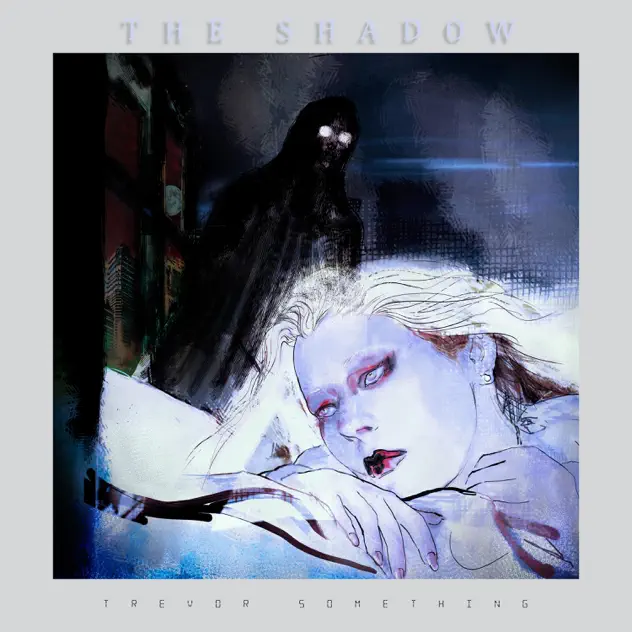
Trevor Something
The Shadow
Trevor Something
The Shadow
- release date /2025-04-04
- country /US
- gerne /Darksynth, Darkwave, Dreamwave, Electronica, Gothic, Synth Pop, Synthwave
The 12th album from Miami-based synthwave artist Trevor Something.
Trevor Something began releasing music in 2013, debuting with “Synthetic Love” in 2014. Featured on the YouTube synthwave channel NewRetroWave, the album quickly gained attention, with tracks like “Fade Away” and the 2014 mixtape Trevor Something Does Not Exist surpassing 5 million streams by August 2025. Over the years, he has blended synthwave with ’80s new wave, goth, and post-punk influences, crafting a darkly romantic, uniquely atmospheric sound. Despite a cryptic remark around the 2022 release “The Death Of” suggesting it might be his final album, Trevor Something continued releasing music with “Archetypes” (2024) and the present record “The Shadow” (2025).
“The Shadow”, created between 2019 and 2024 and mixed over roughly a year, explores the album’s namesake concept: the shadowy, hidden aspects of the ego. As Trevor Something explains, understanding one’s dark side allows harmony between light and darkness. Musically, the album is his darkest and most melancholic yet, cloaked in aurora-like synth textures, minimal bass and kick patterns, and smooth, ethereal vocals that feel like elegies drifting through a neon-lit cityscape. Fans of his prior work will also recognize the goth-infused decadence reminiscent of his covers of The Cure and Depeche Mode.
Highlights include:
#6 “Cruel Intentions” – Cold, John Carpenter-inspired piano motifs gradually give way to a cathedral-like, choral outro, a masterful shift in atmosphere.
#7 “Numb The Pain” – A comparatively upbeat and catchy track featuring crystalline synth tones that shimmer with clarity.
#9 “Cry Until I Die” – Enveloped in some of the deepest reverb of Trevor Something’s discography, this track evokes the ethereal industrial rock of HEALTH, adding depth uncommon in standard synthwave.
“The Shadow” is recommended not only for synthwave fans but also for listeners of goth, darkwave, post-punk, dream pop, and shoegaze—particularly those drawn to House of Harm, CD Ghost, and HEALTH.
For those wondering where to start in his extensive catalog, my personal guide:
【Pop】
【Dark】
【Shoegaze / Post-punk】
【Dream pop】
Every album maintains a high standard, so in short: “you can start anywhere and be assured of quality.”



greedi
Haymaking
greedi
Haymaking
- release date /2025-02-28
- country /US
- gerne /Alternative Rock, Grunge, Shoegaze, Slowcore
The latest EP from Nashville-based solo shoegaze artist greedi.
Known for heavy, melancholic shoegaze that draws lineage from Whirr and Deftones, the EP immediately immerses listeners in a chilling atmosphere with the opening tracks #1 “Writhe” and #2 “Like You.” #4 “Soft Crash” explores driving, high-energy shoegaze, while #5 “Safe” drifts in a Slowdive-esque shimmer, evoking the grandeur of sunlight spreading across a snowy plain. This range demonstrates a clear expansion of expressive scope, and among the younger Nu-Gaze acts, greedi stands out for maintaining a strong, traditional shoegaze sensibility. The vocals are notably skillful, and the overall potential of the EP is high.
That said, the production still retains a DIY feel, suggesting room for further growth. With refined production and the addition of a stronger personal signature, future releases could become even more compelling. Since the self-produced single “fatty,” greedi has embraced greater creative control, noting that it allows “the full spectrum of self-expression to be embedded into each track.” Listening confirms a tangible increase in sonic presence and depth, signaling exciting developments ahead.

OVERSIZE
Vital Signs
OVERSIZE
Vital Signs
- release date /2025-02-28
- country /UK
- gerne /Alternative Rock, Emo, Grunge, Nu Gaze, Shoegaze
The first full-length album from UK shoegaze band OVERSIZE.
Released via SharpTone Records, home to artists like Loathe and Paledusk, the album was recorded with the lineup of Sam Shutler (drums), Sam McCauley (vocals), George Lewis (bass), Tazz Edwards (guitar), and Lewis Lennane‑Emm (guitar). Following two EPs, this debut centers on the theme of grieving and acceptance, inspired by McCauley’s personal experience of losing his mother.
OVERSIZE blends elements of ’90s alternative rock, emo, and grunge with a heavy, immersive sound. Their signature crashing guitars echo Swervedriver and Catherine Wheel, while this album leans into a more atmospheric and introspective approach.
#1 “Stalling” opens the record gently, while #2 “Are You With Me?” escalates with heavy backing riffs and melodic lead guitar. #3 “Fall Apart” offers a melancholic counterpoint, adding depth to the album’s emotional landscape. #4 “Something Clean” moves from fragile melodies into a dramatic cascade of shouts and rapid-fire drums, showcasing dynamic composition.
#8 “Salt,” a collaboration with Heavenwards, incorporates deep reverb to evoke the shadowy, moody textures characteristic of UK shoegaze. Each track maintains its own identity, with carefully managed tension and release, keeping the listener engaged throughout.
This debut firmly establishes OVERSIZE as a distinctive presence in the competitive heavy shoegaze scene. Fans of Split Chain and Leaving Time will find much to appreciate.
Wisp
If Not Winter
Wisp
If Not Winter
- release date /2025-08-01
- country /US
- gerne /Alternative Rock, Dream Pop, Grunge, Shoegaze, Slowcore
The first full-length album from San Francisco shoegaze artist Wisp (real name Natalie R Lu).
Released via Interscope Records—the label behind top-tier artists like Billie Eilish, Kendrick Lamar, and Lady Gaga—this debut LP marks a major step in Wisp’s meteoric rise. Many will be familiar with her Cinderella story: at 18, Natalie’s single “Your Face” went viral on TikTok, leading to a contract with Interscope and the launch of her professional career. She followed with the 2024 EP “Pandora”, performed at Coachella in 2025, and opened for major acts including System of a Down and Deftones, quickly evolving into a fully realized live band. With this momentum, Wisp has become one of the most talked-about names in contemporary shoegaze.
Produced over roughly a year, this album expands Wisp’s sonic palette and pushes the boundaries of shoegaze. Mixing by Lars Stalfors (St. Vincent, Soccer Mommy) and Stephen Kaye (Laufey, Ziggy Marley), with mastering by Ruairi O’Flaherty (Phoebe Bridgers, boygenius), elevates the sound to a new level: distorted guitars crash without harshness, and the delicate, whispery vocals are rendered in exquisite detail. Compared to “Pandora”, the improvement is immediately apparent.
Highlights include:
#1 “Sword” opens with folk-inspired guitar and misty, fragile vocals before powerful drums erupt, unleashing a wall of sound that jolts the dreamlike listener into the story’s beginning.
#5 “Guide Light” evokes My Bloody Valentine with psychedelic, crashing shoegaze. Its gradual descent into slower, heavier passages will delight fans of dense, immersive walls of sound.
#7 “If Not Winter” channels slowcore to convey the sadness of parting, with a poignant piano outro that leaves a lingering emotional impact.
#8 “Mesmerized” is one of Wisp’s rare uptempo tracks, its soaring chorus melody bursting with energy.
#9 “Serpentine” balances tender lyricism with catchy hooks, carrying faint echoes of ’90s–’00s J-pop, from artists like the brilliant green or Aika Ohno.
#11 “Black Swan,” produced again with Kraus, ranks among Wisp’s heaviest shoegaze offerings and serves as one of the album’s highlights. The piercingly beautiful vocals slice through the noise, creating a striking counterpart to the earlier Kraus-produced track “Pandora”.
#12 “All I Need” closes the album on a pastoral, acoustic note, conjuring imagery of thawed snow and verdant meadows.
Despite contributions from multiple producers and composers, the album’s vision remains unified—a testament to professional craftsmanship. The music videos reinforce this narrative world, featuring Wisp as a heroine awaiting rescue in a castle, or transforming into an armored knight, maintaining a fantastical continuity that echoes her angelic depiction on “Pandora”.
With 12 tracks that refine Wisp’s shoegaze signature while embracing new creative directions, the album far surpasses its predecessor in emotional impact. Unlike the early critiques that dismissed her as a TikTok-fueled phenomenon, Natalie’s full compositional involvement is evident across the record, making such dismissals obsolete.
This release stands as a defining work for modern shoegaze (Nu-Gaze), and may well become a milestone in the genre’s 2020s renaissance. Its influence on the increasingly crowded Nu-Gaze scene—whether to intensify the wave or mark its consolidation—remains to be seen. Leading up to the release, Wisp already had 3.07 million monthly Spotify listeners, making her next moves highly anticipated.
As a fan, one can only hope for her continued success—and look forward to the eventual Japanese tour. Having emerged from the winter of “Pandora” into the spring of “If Not Winter”, one wonders whether Wisp’s next chapter will herald a “summer” of poppier, more hook-driven shoegaze. Tracks like “Mesmerized” hint that the door is already ajar.
Previous review: Wisp - Pandora
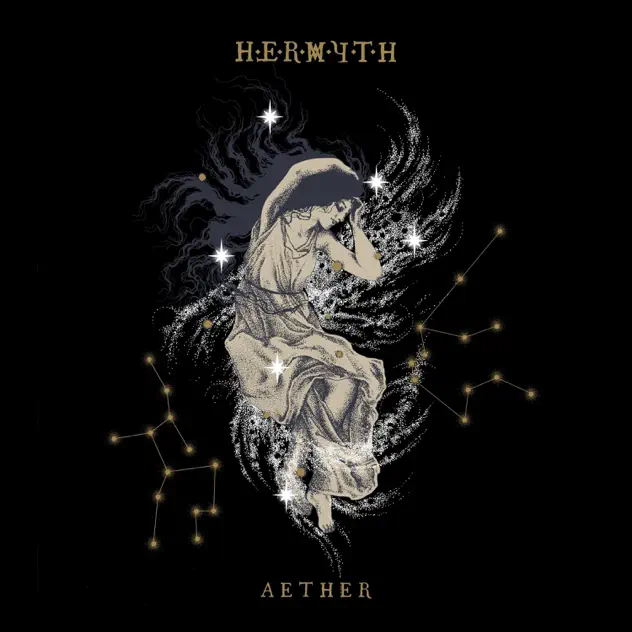
Hermyth
Aether
Hermyth
Aether
- release date /2025-03-07
- country /Italy
- gerne /Ambient, Doom Metal, Doomgaze, Drone, Post-Rock, Shoegaze
The second album from Italian cosmic doomgaze duo Hermyth.
Formed in 2021 by Nick Magister (guitar, synth, drums) and Therese Tofting (vocals), Hermyth carries a strong lineage from doom metal—Nick previously played in Ghostheart Nebula, while Therese was part of Funeral Void. The band name likely blends Hermes, the Greek messenger god, with the concept of myth. Their sophomore release, “Aether”, takes its title from the classical “fifth element” once believed to fill the heavens. Though scientifically obsolete, the term remains symbolic of otherworldly beauty—a quality reflected throughout the album’s sound.
Sonically, “Aether” marries majestic keyboards and shimmering guitar with Therese’s ethereal vocals, perfectly evoking the album’s celestial theme. Compared to their debut, the guitar tones here glisten more and the vocals are pushed forward, slightly reducing the immersive, shoegaze-like haze of the earlier work. Nevertheless, song lengths remain relatively concise, and the focus on vocal melodies offers a more accessible experience for listeners who might find doomgaze or post-rock’s typical expansiveness challenging—a contrast to longer-form projects like ISON.
#1 “Heavens” features sparkling guitars and synth waves reminiscent of starlight, paired with fleetingly beautiful vocals, conjuring a sense of astral flight and spiritual transcendence. One might liken it to a doomgaze reimagining of Noriko Watanabe’s “Phoenix”.
#2 “Aether” draws on folk and traditional music for an exotic, mystical atmosphere, evoking the ancient experience of finding mythological meaning in the stars and approaching the heavens with reverence.
#5 “Divination” features guest vocals from Gogo Melone (Aeonian Sorrow), whose vibrato-laden performance adds a fiery counterpoint to Therese’s serene voice—if Therese represents a cool blue Rigel, Melone blazes like Aldebaran.
#6 “The High Priestess” is the album’s most atmospheric piece, fully immersing the listener in the world of “Aether”. Its ten-plus-minute runtime allows for slow absorption, evoking a vast starry sky behind closed eyelids.
While shoegaze textures are somewhat restrained, Hermyth’s mythic cosmic vision remains fully intact. Surrender to the aether and enjoy this 44-minute interstellar journey.
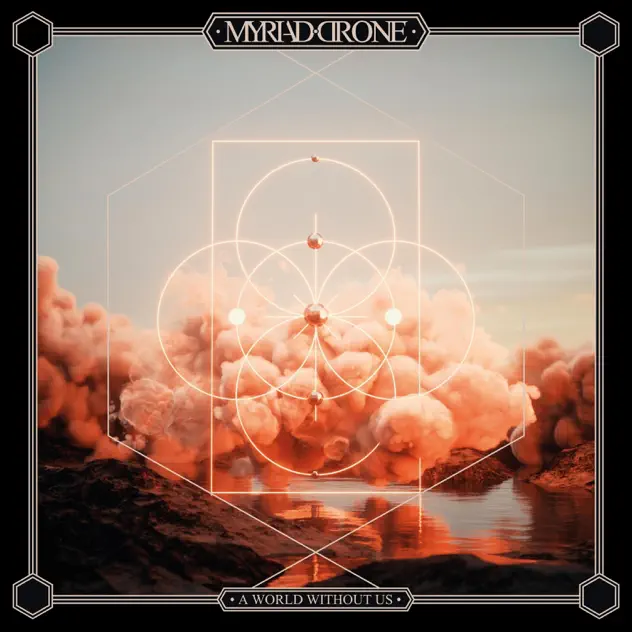
Myriad Drone
A World Without Us
Myriad Drone
A World Without Us
- release date /2025-03-08
- country /Australia
- gerne /Blackgaze, Doomgaze, Post-Metal, Post-Rock, Progressive, Shoegaze
The second album from Australian cinematic post-metal band Myriad Drone.
Originally launched in 2016 as a solo project by Shane Mulholland, Myriad Drone evolved into a full four-piece the following year. After two lineup changes following their debut, the current formation features Shane Mulholland (Gt/Vo), Jacob Petrossian (Gt), Simon Delmastro (Ba), and Frankie Demuru (Dr). Their 2019 debut “Arka Morgana” was ranked #5 on Where Post Rock Dwells’ Best Albums of 2019 list, and has since been widely cited as a standout within modern post-rock and adjacent scenes.
Arriving six years later, “A World Without Us” appears to frame itself around the notion of an apocalyptic or post-human world—an impression suggested by both its title and its cover art, which recalls the dystopian tone of the film The Pink Cloud. Sonically, the most notable evolution lies in Mulholland’s vocals. Clean vocals are pushed significantly further forward in the mix, while harsher screams are introduced more prominently, sharpening the contrast between fragile lyricism and visceral aggression. His clean delivery is particularly delicate and luminous, inviting comparisons to Jónsi (Sigur Rós) or Neige (Alcest), though the influence remains suggestive rather than explicit. The material also leans slightly closer to post-rock than before, adopting a more pastoral atmosphere that subtly echoes Alcest’s melodic sensibilities.
#1 “A World Without Us” opens with restraint before erupting into dense walls of sound and emotionally charged vocals. Its post-rock dynamic of quiet tension and explosive release is offset midway by a sudden shift into folk-tinged choral passages, moving toward an Alcest-like unison of vocals and melody. Despite its ten-minute runtime, the track establishes the album’s scope with ease.
#2 “Forlorn Hope” layers crushing guitars beneath ethereal clean vocals and feral screams, evoking something akin to a final, mythic confrontation. As the label has noted, the track balances post-rock and shoegaze elements while pushing toward a darker overall palette, making it one of the album’s most representative statements.
#3 “DYHAMTTAJ” unfolds as a grand, progressive piece, where intricate rhythmic shifts support soaring, almost sacred vocal lines.
#4 “Longing” highlights Mulholland’s clean vocals within an elegant post-rock framework, gradually building toward a cathartic crescendo of overwhelming distortion.
#5 “Disharmonia” veers into blackgaze territory, driven by blast beats and tremolo picking. Brief flashes of clean vocals introduce a glimmer of light before being swallowed by noise again, suggesting a struggle against inevitable collapse.
#6 “Whereabouts Unknown” begins with a TOOL-like odd-meter groove and a ritualistic, folk-inflected introduction. Tension accumulates steadily until it resolves in a majestic, choir-like climax. Developed from an initial drum pattern conceived by Frankie Demuru and expanded collectively by the new lineup, the track points toward new terrain for the band. While “TOOL meets shoegaze” remains a relatively rare convergence, it has begun to surface more frequently—and this may be one of its more compelling realizations to date.
The closing #7 “Valediction” withdraws into a subdued, quietly melancholic melody, allowing the album to fade out with a sense of stillness. That final calm suggests a world after humanity’s disappearance, reinforcing the album’s broader thematic arc. “A World Without Us” can be read as a kind of requiem for a vanishing species, and stands as one of the more accomplished post-rock / shoegaze-adjacent releases of the year. Fans of Sigur Rós, Alcest, or Holy Fawn will likely find much to appreciate here.
Previous review: Myriad Drone - Arka Morgana
Ame no Naka no Uma
Triste EP.
Ame no Naka no Uma
Triste EP.
- release date /2025-03-28
- country /Japan
- gerne /Alternative Rock, Dream Pop, Electronic, Shoegaze
The 2017 EP from Japanese shoegaze project Ame no Naka no Uma.
Originally released in 2017, this EP by Ame no Naka no Uma received its first physical edition in 2025 via the Chinese indie label Amemoyo. The newly released streaming version is presented as a two-disc set, split into Disc 1 and Disc 2.
Centered around Akihiro Nio (guitar/vocals), Ame no Naka no Uma operates primarily as a solo project. On this release, Nio handled every stage of production himself—from songwriting and recording to mixing and mastering. Support members Keisuke Yoshimura (guitar/vocals), Rintaro Yamamoto (bass), and Saki Miyamoto (drums) are credited, and Disc 1 in particular captures a noisy, performance-driven shoegaze sound with a strong sense of live immediacy.
#1 “Triste” opens with siren-like guitar noise that howls and swells, gradually dissolving into a mournful vocal line. The result suggests an ideal form of melancholic shoegaze—immersive, emotionally direct, and finely balanced. Nio’s innocent vocal tone, which carries both sweetness and pain, may recall ART-SCHOOL’s Riki Kinoshita, aligning closely with the song’s title and its expression of sorrow.
Following this, #2 “Dancer In The Dark” shifts into a full-bodied wall-of-sound dance track. Its explosive momentum and melodic phrasing evoke comparisons to Supercar’s later-period classic “Yumegiwa Last Boy,” particularly in its cool vocal delivery and the shared emotional vocabulary of longing and desire. Whether intentional homage or unconscious resonance, the similarity adds an additional layer of intrigue.
Disc 2 presents home-recorded versions of the same material. Stripped down and lo-fi, these takes emphasize fragility and intimacy, revealing entirely different emotional contours within familiar songs. The contrast between the two discs underscores the project’s flexibility—demonstrating how texture and production alone can dramatically reshape perception.
A new track was uploaded to SoundCloud approximately a year ago, suggesting that Ame no Naka no Uma remains active. For listeners drawn to melancholic Japanese shoegaze with both rawness and sensitivity, this EP offers a compelling point of entry well worth revisiting.
bdrmm
Microtonic
bdrmm
Microtonic
- release date /2025-02-28
- country /UK
- gerne /Alternative Rock, Dream Pop, Electronic, Industrial, Shoegaze, Trip Hop
The third album from Hull-based UK shoegaze band bdrmm.
Released via Rock Action Records—the label founded by Mogwai—this album continues bdrmm’s steady evolution from its origins as Ryan Smith’s home-recording project into a fully realized band. Their 2020 debut “Bedroom” drew attention for its shoegaze filtered through gothic and post-punk shadows, while 2022’s “I Don’t Know” broadened their palette by incorporating ambient and trip-hop elements.
With “Microtonic,” that trajectory accelerates. Influences cited by the band include Björk, Four Tet, and Massive Attack, and the album pushes decisively further into electronic territory. The shift is not merely stylistic but contextual: anxieties, isolation, and a sense of social stagnation in the post-pandemic landscape appear to inform the record’s atmosphere. The towering shoegaze walls that once defined their sound recede into the background, replaced by uneasy synth melodies that cling like fog and gradually heighten tension. Beneath them, mechanistic beats generate a trance-like pull that favors immersion over release.
What bdrmm seems to be proposing here is not the euphoric rush of rave culture, but dance music as a form of escape—a temporary refuge from a reality that feels increasingly claustrophobic. It is a bold recalibration, and one likely to divide listeners who came to the band through their earlier, more guitar-driven work.
For those receptive to darker, electronically inclined sounds—particularly fans of acts such as The KVB or SPC ECO—“Microtonic” offers a compelling and confident step into new territory, one that reframes bdrmm not as a shoegaze band experimenting with electronics, but as an evolving project redefining its core identity.
SOM
Let The Light In
SOM
Let The Light In
- release date /2025-07-14
- country /US
- gerne /Alternative Rock, Doomgaze, Post-Metal, Shoegaze
The third album from U.S.-based post-metal and doomgaze band SOM.
Released via Pelagic Records, a long-established home for post-metal, SOM was formed by current and former members of Caspian, Junius, and Constants. Prior to this release, the band had issued two full-length albums and two EPs. During the recording of this album, founding drummer Duncan Rich departed, prompting a shift in the lineup. The current formation consists of Will Benoit (vocals, bass, guitar, electronics), Justin Forrest (drums, bass), Mike Repasch-Nieves (guitar, piano), and Joel Reynolds (guitar, synths).
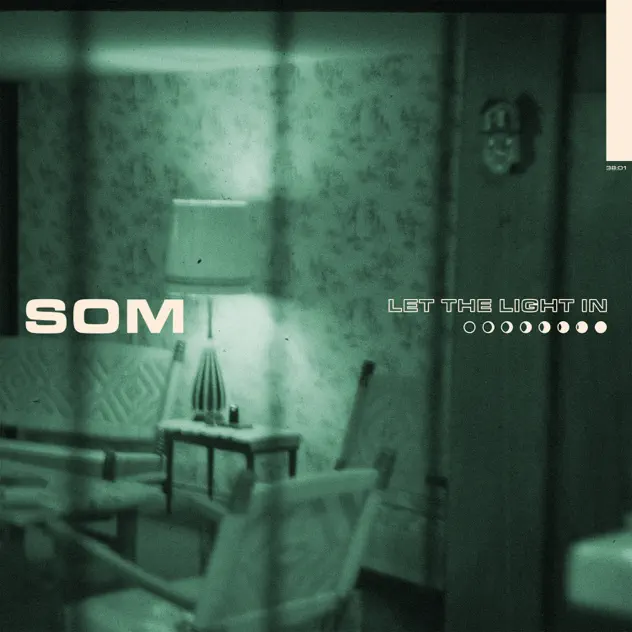
SOM’s sound is built on the interplay between grunge-, shoegaze-, and doom metal–derived guitar weight and an ethereal vocal presence. This balance led Metal Injection to describe their music as “doom pop,” an apt phrase that captures its distinctive character—heavy yet strangely inviting, like sweetness clinging to the thorns of a briar. Influences hinted at on their 2023 EP, including an admiration for Depeche Mode and a visual nod to Type O Negative through green-toned artwork, remain clearly present here. Interviews have confirmed the artwork as an intentional homage, and Benoit has also spoken of early conceptual ideas involving a figure with the commanding presence of Peter Steele—an ideal he acknowledges he could never fully embody, but one that nonetheless lingered as a reference point.
As suggested by its title, “Let the Light In” signals a noticeable shift in tone. Where earlier releases leaned more heavily into melancholy, this album appears to move toward an openness to hope. The change is most explicit on #2 “Let the Light In,” written amid the bleak atmosphere of the pandemic, where the repeated invocation to “let the light in” functions as both lyric and thesis statement.
As a result, the album as a whole feels less overtly dark than its predecessors. From a dark shoegaze perspective, this may register as a slight softening. Yet the contrast between restraint and intensity works to the advantage of certain tracks. #5 “Give Blood” stands out for its sharp interplay of stillness and force, while #8 “The Light” channels a decadent, deeply resonant sorrow. In these moments, darkness feels more potent precisely because it is set against a brighter backdrop—an embodiment of the idea that the stronger the light, the deeper the shadow it casts.
Beginning in October, the band is set to tour the UK alongside Blanket in support of Slow Crush. How this turn toward light shapes their next phase remains an intriguing question—and one that invites continued attention as their trajectory unfolds.
Circuit des Yeux
Halo On The Inside
Circuit des Yeux
Halo On The Inside
- release date /2025-03-14
- country /US
- gerne /Darkwave, Drone, Gothic, Industrial, Neoclassical, Synth Pop
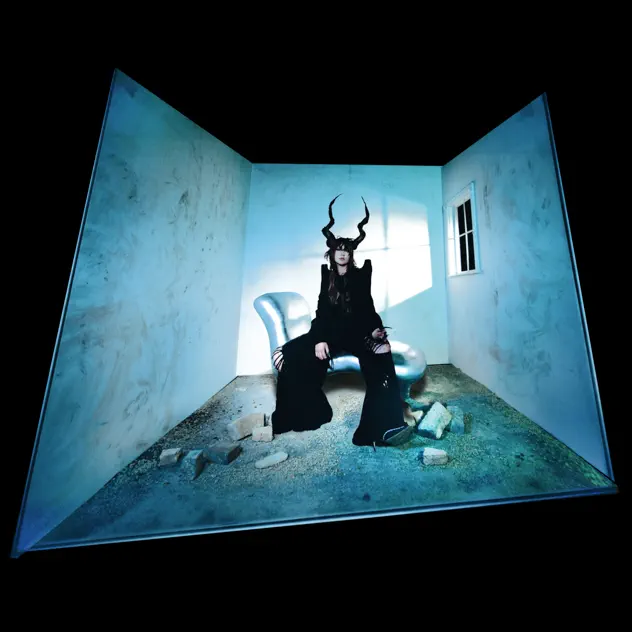
The eighth album from Chicago-based singer-songwriter Circuit des Yeux.
Released via Matador Records—home to artists such as Interpol and Snail Mail—Circuit des Yeux, the project of Haley Fohr, continues to defy easy categorization. Known for commanding a four-octave vocal range, Fohr moves fluidly across gothic, post-punk, neoclassical, darkwave, industrial, and folk, constructing a sound that feels deliberately borderless. On this album, the industrial dimension is brought further to the foreground, resulting in a darker and more imposing evolution of her work.
Throughout the record, Fohr navigates between resonant low registers and piercing falsetto with remarkable control. The effect suggests a cinematic form of dark ritual—one that might be imagined as Chelsea Wolfe, Dead Can Dance, and Depeche Mode converging within a dystopian, digital landscape.
For listeners with an affinity for shoegaze-adjacent textures, #4 “Anthem of Me” stands out as a clear highlight. Majestic neoclassical elements merge seamlessly with drone-like distorted guitars and a monumental, slow-moving beat that evokes the sound of colossal footsteps. Its sense of scale and suspended intensity may resonate strongly with fans of spectral drone and doomgaze acts such as ISON or Lovesliescrushing.
More broadly, the album aligns with a growing tendency to fuse drone-oriented sound design with folk, neoclassical, and darkwave frameworks—a direction also evident in recent works by artists like Ethel Cain and Penelope Trappes. Within this context, Circuit des Yeux positions herself not only as a participant in this emerging aesthetic, but as one of its most distinctive and commanding voices.