
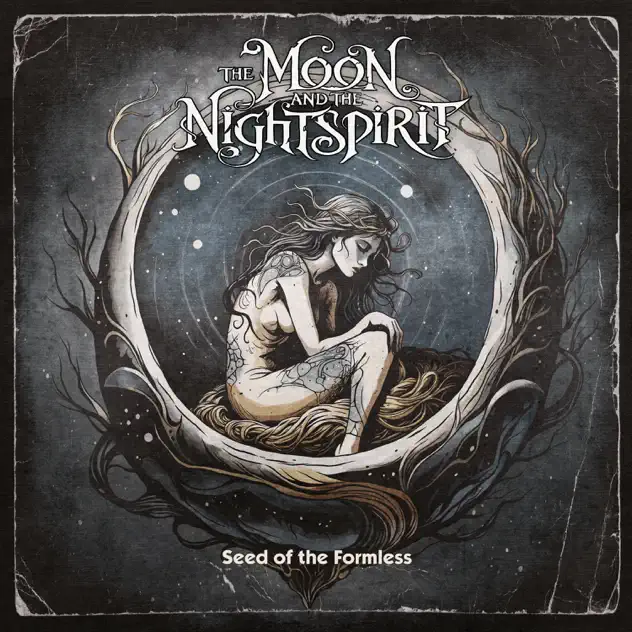
The Moon and the Nightspirit
Seed of the Formless
The Moon and the Nightspirit
Seed of the Formless
- release date /2026-04-17
- country /Hungary
- gerne /Ambient, Folk, Doom Metal, Gothic Metal, Post-Metal
The eighth album from Hungarian ethereal folk duo The Moon and the Nightspirit.
Formed in 2003 by Ágnes Tóth (vocals, violin) and Mihály Szabó (guitar), The Moon and the Nightspirit have released seven albums to date. Ágnes’ delicate, mystical vocals and graceful violin intertwine with Mihály’s poetic acoustic guitar and dynamic percussion reminiscent of ancient rituals, creating an ethereal world inspired by mythology and the worship of nature.
With this album, however, the duo ventures into post-metal territory. Heavy guitars and synthesizers enter the mix, expanding their sound into a cosmic-scale soundscape while preserving the contrast between serenity and weight. Rather than using heaviness to simply heighten the intensity, the album draws its power from the mysterious resonance created by layers of sound.
One of the tracks where this shift is most apparent is #4 “The First Tremor.” Ágnes Tóth’s delicate, beautiful vocals intertwine with distorted guitars and a folk-inspired melody reminiscent of Amorphis, bringing their traditional sound into striking harmony with their new direction. The growls that emerge toward the end provide another unexpected and invigorating accent. Meanwhile, #3 “Odyssey Limen” introduces hints of post-black metal guitar work, making it the album’s most aggressive track. For a band whose identity has long been rooted in ethereal folk, this is clearly new territory.
Some listeners may be surprised by such a bold change in direction, but looking back at their history, the shift is far from abrupt. Both musicians were members of the gothic metal band Even Song from the late 1990s into the early 2000s. For longtime listeners familiar with their roots, the move toward a heavier metal sound on this album therefore feels like a natural progression.
That said, this is not simply a return to their past. Elements of their gothic metal years remain, but they are used with considerable restraint. The classically influenced guitar work, symphonic keyboards, and interplay between male and female vocals are no longer central to the music. Instead, every instrument works seamlessly around Ágnes Tóth’s voice. Rather than pushing individual elements to the forefront, the duo blends them into a unified sonic image, creating a dense and expansive sound. This sense of balance reflects the mature sensibility they have developed through their many years of exploring folk music.
One slight disappointment, however, is the absence of Hungarian lyrics. The distinctly foreign, almost otherworldly quality of their native language had long been one of the elements that set their music apart, making the shift to English lyrics feel somewhat less distinctive. It is also difficult not to miss the plaintive, almost weeping violin that had become one of their signature sounds.
That makes it all the more intriguing to consider where they might go next. They could strengthen the folk elements once again, bringing back the violin and Hungarian lyrics and moving toward the exotic folk/doom metal territory of Silent Stream of Godless Elegy. Alternatively, they could retain their ethereal beauty while pushing the post-black metal aggression hinted at on #3 even further, exploring the tension between serenity and intensity in the vein of Sylvaine or Myrkur.
“Seed of the Formless” carries forward the ethereal beauty they have cultivated over the years, while expanding their world into the cosmos through a richer, more layered sound. The spirits of the moonlit night have left the forest and are now reaching toward the stars. What awaits them beyond that horizon remains unknown—but the possibilities before them are as infinite as the universe itself.


